
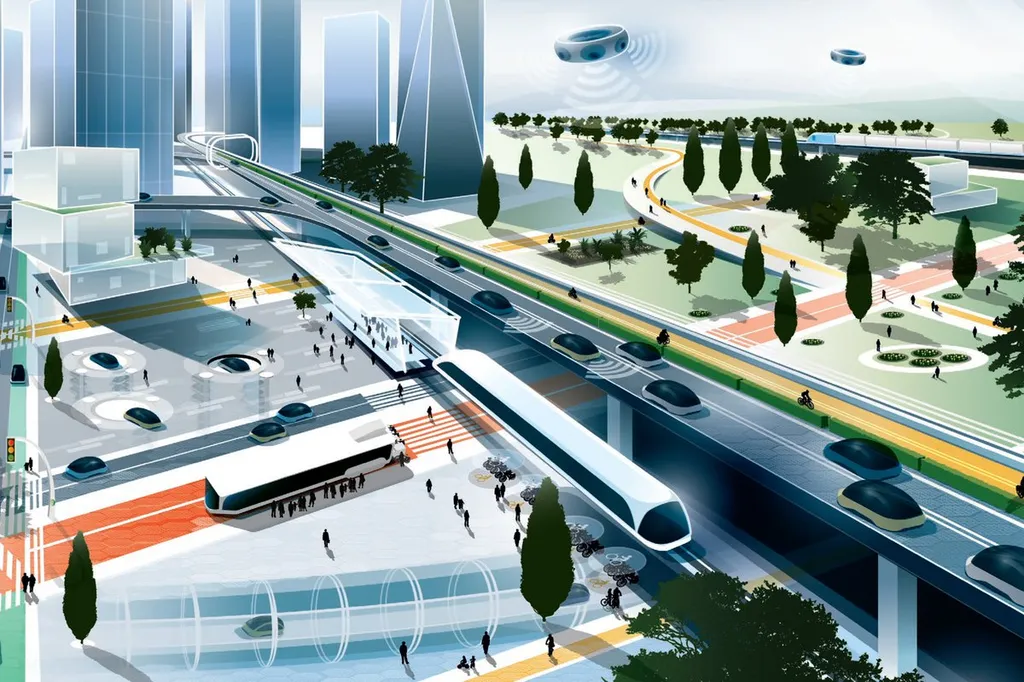
In the rapidly evolving landscape of smart cities, a groundbreaking study is shedding light on how geospatial artificial intelligence (GeoAI) is revolutionizing urban environments. Led by H. K. Sevinç from the Vocational School of Information Technologies at Karabuk University in Turkiye, this systematic review, published in ‘The International Archives of the Photogrammetry, Remote Sensing and Spatial Information Sciences’ (translated as ‘International Archives of Photogrammetry, Remote Sensing and Spatial Information Sciences’), delves into the transformative potential of GeoAI, particularly in the realms of transportation, building models, and navigation.
Sevinç’s research highlights how GeoAI, the fusion of artificial intelligence with geospatial data, is becoming a cornerstone for smart city initiatives. By integrating AI with geographic information systems (GIS), urban planners and policymakers can make data-driven decisions that enhance efficiency, sustainability, and livability. “GeoAI is not just a tool; it’s a game-changer,” Sevinç asserts. “It’s reshaping how we design, manage, and interact with our urban spaces.”
One of the most compelling aspects of this study is its focus on smart transportation systems. With urban populations growing, the need for intelligent traffic management and public transportation systems is more critical than ever. GeoAI enables real-time data analysis, predicting traffic patterns, optimizing routes, and reducing congestion. This not only improves commuter experiences but also has significant implications for the energy sector. Efficient transportation systems can lead to reduced fuel consumption and lower emissions, aligning with global sustainability goals.
The study also explores the creation of 3D building models and indoor navigation systems. These advancements are not just about convenience; they’re about safety and accessibility. For instance, in large commercial buildings or energy facilities, GeoAI can guide emergency responders to the exact location of an incident, saving precious time and potentially lives. “Imagine a world where every building is a smart building, where navigation is seamless and intuitive,” Sevinç envisions. “This is the future GeoAI is helping us build.”
Moreover, the research underscores the importance of open data platforms and urban analytics. By making geospatial data accessible and interpretable, cities can foster innovation and collaboration. This open-data approach can drive the development of new applications and services, benefiting various sectors, including energy. For example, utility companies can use this data to optimize energy distribution networks, predict maintenance needs, and enhance service reliability.
The study also touches on web-based interactive data visualization, a tool that can democratize access to complex geospatial data. By presenting data in an engaging and understandable format, stakeholders can make informed decisions, fostering transparency and accountability.
As we look to the future, the implications of this research are vast. GeoAI is poised to play a pivotal role in shaping the cities of tomorrow. For the energy sector, this means more efficient operations, reduced environmental impact, and improved service delivery. “The potential is immense,” Sevinç concludes. “But it’s not just about the technology; it’s about how we use it to create smarter, more sustainable, and more livable cities.”
In the quest for smarter cities, GeoAI is emerging as a powerful ally. As Sevinç’s research shows, its applications are vast and its potential is profound. For the energy sector and beyond, the future is not just smart; it’s geospatially intelligent.