
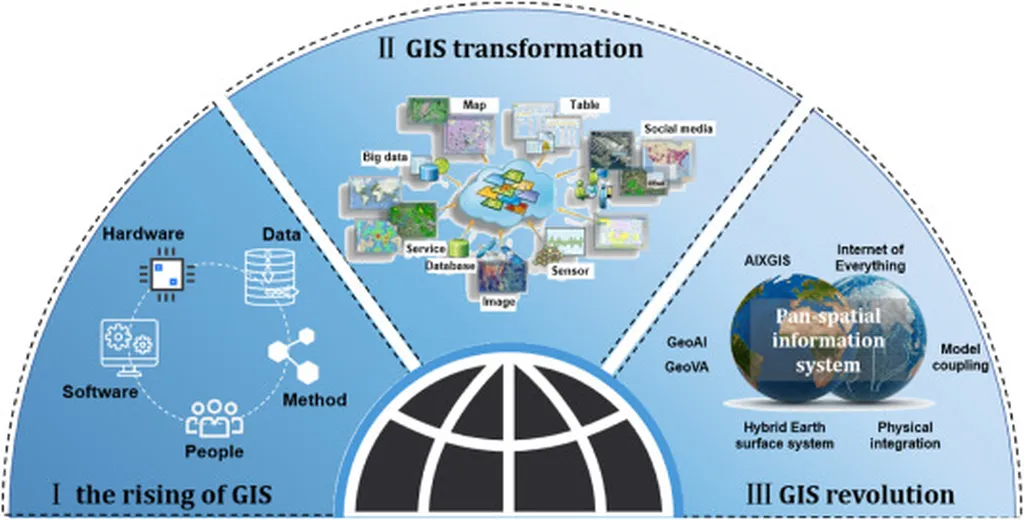
In a world grappling with climate change and environmental degradation, the need for precise, real-time environmental data has never been more critical. A groundbreaking review published in *Geoinformatica Polonica* (which translates to *Polish Geoinformatics*) by Anna Szafarczyk of the AGH University of Science and Technology in Krakow, Poland, sheds light on how Geographic Information Systems (GIS) and Remote Sensing (RS) technologies are revolutionizing environmental monitoring. The research underscores the transformative potential of these tools, particularly for the energy sector, where data-driven decisions can lead to significant efficiency gains and sustainability improvements.
Szafarczyk’s review highlights several key innovations that are reshaping environmental surveillance. One of the most notable advancements is the integration of artificial intelligence (AI) and machine learning (ML) into GIS and RS technologies. These technologies enable enhanced image classification, allowing for more accurate and rapid analysis of environmental data. “The fusion of AI and ML with GIS and RS is a game-changer,” Szafarczyk explains. “It allows us to process vast amounts of data with unprecedented speed and accuracy, providing insights that were previously unattainable.”
Another significant development is the rise of cloud-based platforms like Google Earth Engine (GEE), which offer scalable solutions for environmental monitoring. These platforms enable researchers and industries to analyze large datasets efficiently, making it easier to track changes in land use, water resources, and biodiversity. The use of Unmanned Aerial Vehicles (UAVs) and hyperspectral sensors further enhances the resolution and detail of environmental data, providing high-resolution monitoring capabilities that are crucial for precise decision-making.
The convergence of geospatial analytics with big data, the Internet of Things (IoT), and participatory approaches like citizen science is also expanding the accessibility and impact of environmental data. This democratization of spatial intelligence is particularly relevant for the energy sector, where real-time monitoring and data-driven insights can optimize resource management, reduce operational costs, and enhance sustainability efforts.
Szafarczyk’s research highlights several case studies from Africa, Asia, and global initiatives that demonstrate the practical applications of these technologies. For instance, in land use change detection, GIS and RS tools have been instrumental in tracking deforestation and urban expansion, providing valuable data for policymakers and energy companies. Similarly, water resource assessment and hazard risk mapping have benefited from these technologies, enabling more effective disaster preparedness and response strategies.
Despite the vast potential of these tools, the review also identifies persistent challenges, including data interoperability, technical capacity gaps, policy integration barriers, and ethical concerns related to surveillance and data equity. Szafarczyk emphasizes the need for greater investment in open-source tools, interdisciplinary collaboration, and inclusive data governance to realize the full potential of GIS and RS in achieving environmental resilience and sustainability.
The future directions outlined in the review emphasize real-time monitoring, ethical frameworks, and the democratization of spatial intelligence. These advancements are poised to shape the future of environmental monitoring, offering new opportunities for the energy sector to leverage data-driven insights for sustainable and efficient operations.
As the world continues to grapple with environmental challenges, the innovations highlighted in Szafarczyk’s research offer a beacon of hope. By harnessing the power of GIS and RS technologies, we can make significant strides toward a more sustainable and resilient future. The insights provided by this research are not only thought-provoking but also a call to action for industries, policymakers, and researchers to collaborate and drive meaningful change.