
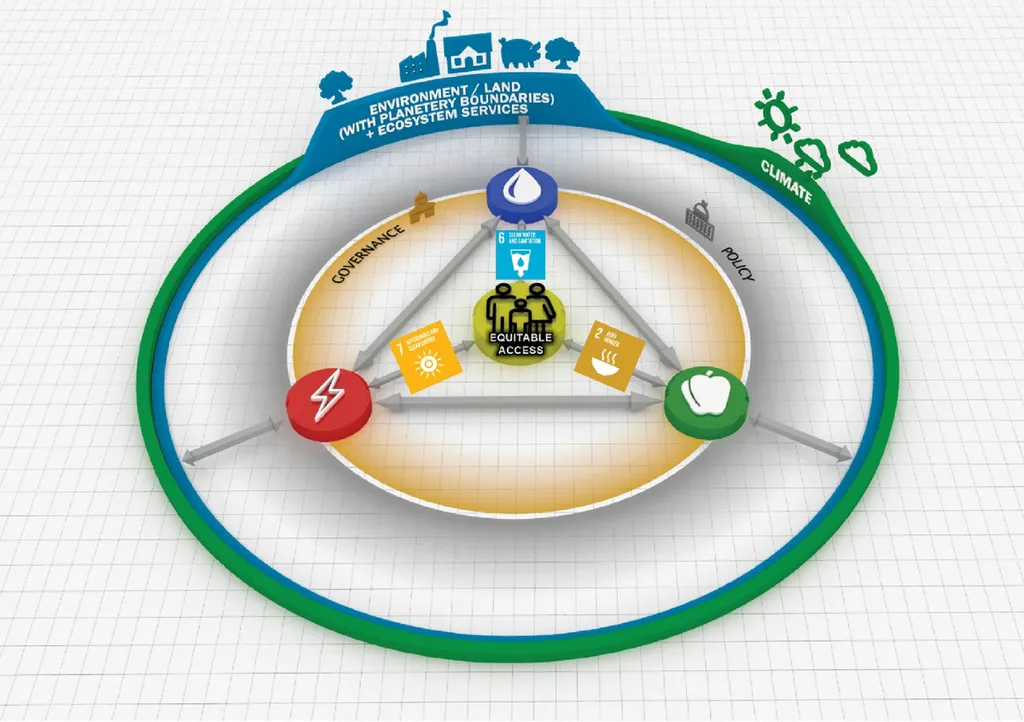
In a groundbreaking study published in the *Journal of Sustainability* (translated from Spanish as *Journal of Sustainability*), researchers have introduced a novel approach to assessing food environments that could revolutionize public health policy and, by extension, impact the energy sector’s sustainability efforts. The Nutrition-Sensitive Food-Environment Index (N-FEI), developed by lead author Tosin H. Akingbemisilu from the International Center for Tropical Agriculture (CIAT), offers a comprehensive framework that goes beyond mere food affordability to encompass dietary diversity, accessibility, and sanitation—key factors influencing malnutrition risks.
The study, which analyzed data from 17,294 food vendors across six countries between 2020 and 2023, employed advanced techniques such as Monte Carlo simulations and machine learning algorithms like XGBoost to predict health risks. This integration of geospatial data and health outcomes provides a robust tool for policymakers to make informed decisions. “The N-FEI is not just an index; it’s a lens through which we can view the intricate interplay between food environments and public health,” Akingbemisilu explained. “By understanding these dynamics, we can design interventions that are both effective and sustainable.”
The implications for the energy sector are profound. As the world grapples with the dual challenges of food security and climate change, the N-FEI offers a scalable model that can be adapted globally. “Energy and food systems are deeply intertwined,” noted Akingbemisilu. “Improving food environments can reduce the energy footprint of food production and distribution, contributing to a more sustainable future.”
The study recommends integrating comprehensive food environment assessments at the administrative census level to reduce estimation biases and enhance policymaking. This approach could lead to more targeted interventions, reducing malnutrition risks and improving public health outcomes. “The N-FEI is a game-changer,” said Akingbemisilu. “It provides a holistic view of food environments, enabling us to address the root causes of malnutrition and its associated health risks.”
Looking ahead, the research suggests that the N-FEI could be used to monitor and evaluate food system transformations, tracking changes in food environments and related health outcomes. This could pave the way for more sustainable and resilient food systems, benefiting both public health and the environment.
As the world continues to seek innovative solutions to global challenges, the N-FEI stands out as a beacon of hope. By bridging the gap between food environments and public health, this index could shape the future of sustainable development, offering a pathway to a healthier, more equitable world. The study’s publication in the *Journal of Sustainability* underscores its relevance and potential impact, marking a significant step forward in the quest for sustainable food systems.