
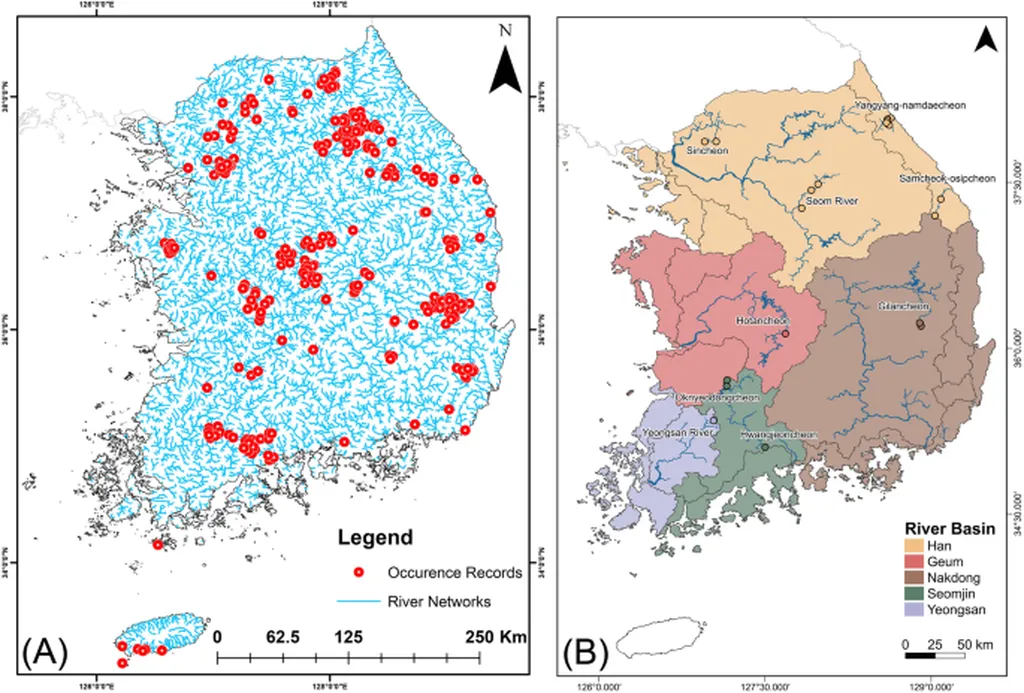
In the heart of South Korea’s intricate river networks, a groundbreaking study led by Gyurim Bang from the Industry 4.0 Convergence Bionics Engineering department at Pukyong National University is unraveling the genetic secrets of the Chinese Minnow, Rhynchocypris oxycephalus. This research, published in the esteemed journal Scientific Reports, is not just about fish; it’s about understanding the delicate balance of ecosystems and the potential impacts on energy and infrastructure projects.
Bang and her team have harnessed the power of environmental DNA (eDNA) to reveal the distinct genetic diversity and evolutionary pathways of the Chinese Minnow in Korean freshwater systems. “We’ve identified suitable regions for eDNA surveys and non-invasive sampling,” Bang explains, “which is crucial for accurate biodiversity assessment and long-term monitoring.” This is not just an academic exercise; it’s a practical tool for developers and environmental managers.
The study’s findings are significant for the energy sector, particularly for hydropower projects and other infrastructure developments that interact with freshwater ecosystems. Understanding the genetic diversity and distribution of key species like the Chinese Minnow can help mitigate potential impacts and ensure sustainable development.
The research revealed high intraspecific genetic diversity, indicating potential cryptic diversity of R. oxycephalus in South Korea. This means that what was once thought to be a single species might actually be several distinct groups, each with its own evolutionary history and ecological role. “The phylogenetic analyses resolved several putative molecular operational taxonomic units,” Bang notes, “highlighting a distinct genetic clade in the Seomjin River basin, likely driven by microhabitat-specific evolutionary processes.”
This genetic diversity is not just a static snapshot; it’s a dynamic story of adaptation and evolution. The shared haplotypes across different river basins suggest ongoing gene flow or anthropogenic influences contributing to genetic admixture. “Historical geographic changes and ancient river networks, from the Early Miocene to the Late Pliocene, likely facilitated the diversification of R. oxycephalus across China, the Korean Peninsula, and Japan,” Bang explains.
The implications for the energy sector are profound. As we strive for sustainable development, understanding the genetic diversity and evolutionary history of key species can help us make informed decisions. It can guide the placement of hydropower plants, the management of water resources, and the mitigation of potential impacts on biodiversity.
This research is just the beginning. As Bang points out, “Given the complexity of multiple river networks in South Korea, further investigations using multiple genetic markers are recommended to enhance understanding of this cyprinid species phylogeography in the region.” The future of energy development lies in this kind of interdisciplinary research, where biology, technology, and environmental science converge to create sustainable solutions.
In the words of Gyurim Bang, “This study represents the first eDNA-based assessment of R. oxycephalus diversity in South Korea, while also providing new evolutionary insights from a broader geographic context in China and Japan.” It’s a testament to the power of science to illuminate the hidden complexities of our natural world and guide us towards a more sustainable future.