
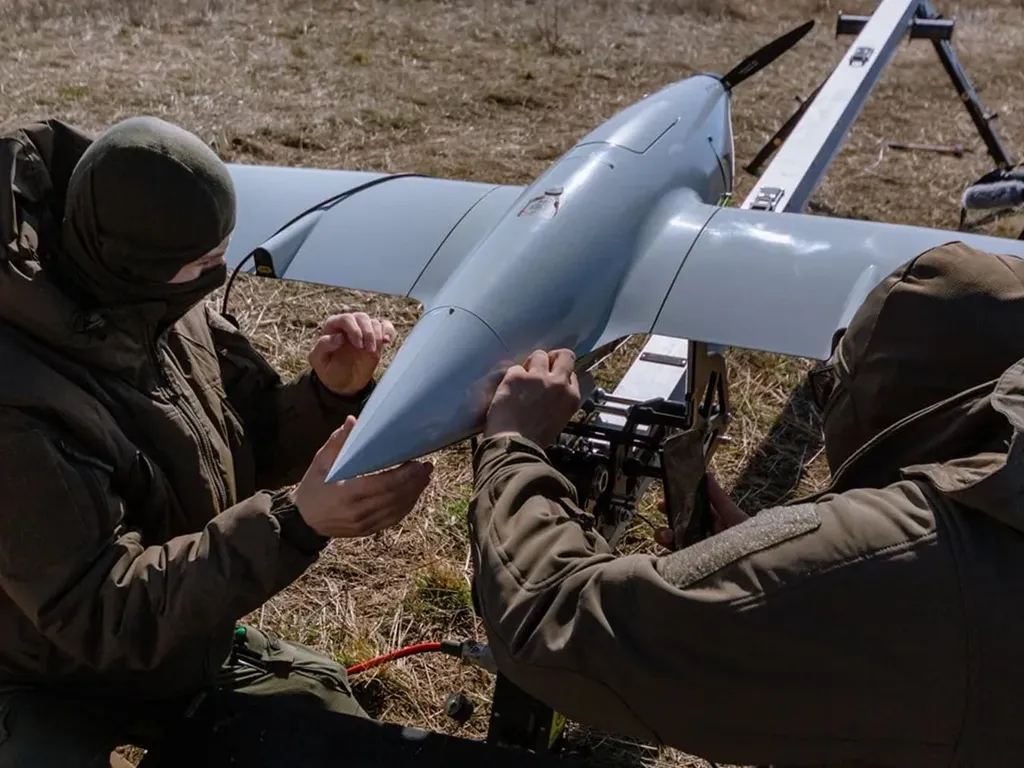
In the ever-evolving landscape of unmanned aerial vehicle (UAV) technology, a groundbreaking advancement has emerged from the College of Artificial Intelligence at Shenyang Aerospace University. Lead author Chuanyun Wang and his team have introduced a novel approach to multimodal image fusion that promises to revolutionize how UAVs process and integrate infrared and visible images. Published in the prestigious journal *工程科学学报* (Journal of Engineering Science), this research could have significant implications for the energy sector, particularly in enhancing the capabilities of drones used for surveillance, inspection, and monitoring.
The challenge of efficiently fusing infrared and visible images on resource-constrained UAV platforms has long been a hurdle for the industry. Traditional methods often suffer from feature redundancy and performance bottlenecks, limiting their effectiveness in real-world applications. Wang’s team has addressed this issue head-on with their lightweight multimodal image fusion network, which employs a dual-branch heterogeneous encoding architecture. This innovative design allows the network to complementarily represent infrared and visible image information, with one branch emphasizing thermal targets and edge responses and the other focusing on texture and detail information.
One of the standout features of this research is the introduction of a lightweight cross-modal attention fusion module. This module enhances the collaborative representation capability of multimodal features by jointly modeling attention relationships across channel and spatial dimensions. As Wang explains, “This approach strengthens complementary information interactions between modalities, leading to more accurate and detailed fused images.”
The team also leveraged semantic features extracted from the pre-trained vision–language model CLIP to incorporate explicit semantic prior guidance into the fusion process. This hierarchical feature-level modulation dynamically adjusts the weights of infrared and visible features, improving the semantic consistency and environmental adaptability of the fused images. The results speak for themselves: the proposed method achieves state-of-the-art performance on multiple mainstream evaluation metrics, including mutual information and structural similarity.
The practical implications for the energy sector are profound. UAVs equipped with this technology can perform more accurate inspections of power lines, solar panels, and wind turbines, identifying potential issues before they escalate. “The ability to dynamically adjust fusion strategies based on different semantic inputs enhances the consistency and relevance of fused images for various tasks,” Wang notes. This adaptability is crucial for energy companies operating in diverse and often challenging environments.
In addition to its superior performance, the proposed model achieves a favorable balance between computational efficiency and fusion performance. Ablation studies show that the inference time of the proposed model is reduced by approximately 50% compared with baseline methods, making it highly suitable for practical deployment in complex environments.
The research also highlights the model’s strong semantic responsiveness and content adaptability. For instance, in low-light enhancement tasks, the model significantly improves brightness and visibility of fused images, highlighting thermal sources present in infrared images. In overexposure correction tasks, it preserves thermal contrast features in infrared images, reducing interference from overexposed regions in visible images. These capabilities are invaluable for energy sector applications, where UAVs often need to operate in varying lighting conditions.
As the energy sector continues to embrace UAV technology for monitoring and maintenance, the need for efficient and accurate image fusion becomes ever more critical. Wang’s research represents a significant step forward in this field, offering a solution that is both technologically advanced and practically applicable. With its ability to dynamically adjust fusion strategies and achieve high computational efficiency, this technology could soon become a standard tool in the energy industry’s arsenal.
The publication of this research in *工程科学学报* (Journal of Engineering Science) underscores its importance and potential impact. As the energy sector looks to the future, the insights and innovations presented in this study will undoubtedly play a pivotal role in shaping the next generation of UAV technology.