
In the rapidly evolving digital economy, data has become the lifeblood of innovation, driving technological advancements and societal progress. However, the traditional model of centralized data sharing has long been fraught with challenges, particularly concerning data privacy, security, and legal compliance. Enter federated learning (FL), a groundbreaking approach that enables collaborative model training without the need to centralize data. This paradigm shift, characterized by “moving models instead of data,” has opened up new possibilities for data circulation and collaboration. Yet, as with any revolutionary technology, it brings its own set of complexities.
One of the most pressing issues in the realm of federated learning is the lack of effective mechanisms for data rights confirmation, benefit allocation, and the delineation of legal responsibilities. This is where the work of Shutong Meng, a researcher at the Beijing Building Research Institute Corporation Limited of CSCEC, comes into play. In a recent study published in the Journal of Engineering Science (工程科学学报), Meng and his team propose a smart legal contract-driven approach for data authorization and execution in federated learning, aiming to bridge the gap between technological innovation and legal enforceability.
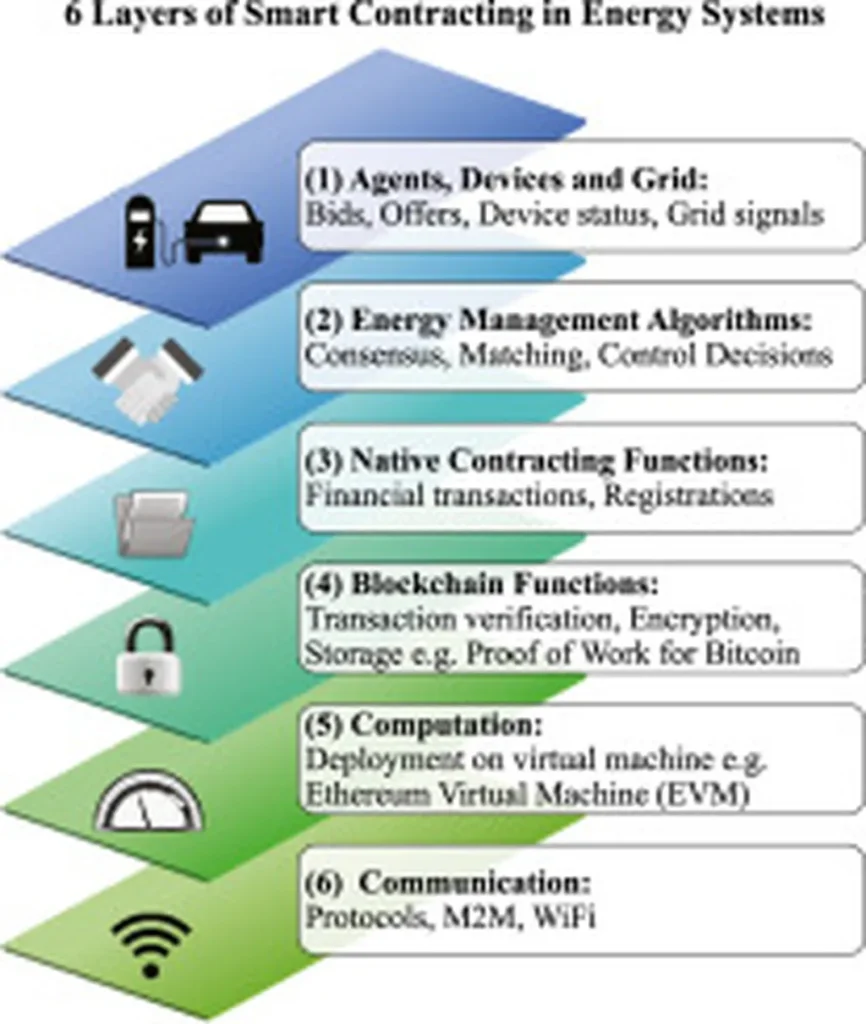
The crux of their solution lies in the integration of smart legal contracts with federated learning architectures. “We designed an FL governance framework based on a specification language for smart contracts (SPESC),” Meng explains. This framework facilitates the publication, assignment, and monitoring of FL tasks through contractual clauses, providing a formal bridge to map complex legal stipulations into verifiable, executable smart contract code on the blockchain.
The implications of this research are profound, particularly for sectors heavily reliant on data collaboration, such as the energy industry. Imagine a future where energy companies can collaborate on predictive maintenance models without compromising sensitive data. Or where smart grids can be optimized through federated learning, with each utility company contributing to the model without exposing their proprietary data. This is not just a pipe dream; it’s a tangible reality that Meng’s work is helping to shape.
The framework introduced by Meng’s team covers the entire life cycle of data elements, from initial authorization through final model deployment. It employs a data authorization module that implements a cyclical “offer–acceptance–execution–arbitration” process via standardized contract templates. This automation transforms traditionally ambiguous legal processes into auditable and predictable technical workflows. “By integrating decentralized identifiers and blockchain technology, the platform ensures identity authentication of contracting parties and enforces data authorization through self-executing contract clauses,” Meng elaborates.
The federated computation module further utilizes contract templates to configure computing tasks within the federated system and oversee the responsibilities and accountability of participants during execution. The contracts establish clear quality standards and ensure that model updates adhere to predefined protocols, making the entire training process verifiable and accountable.
The practical benefits of this approach are already evident. Experimental evaluations have demonstrated the feasibility of automated execution and on-chain traceability of data authorization clauses, ensuring identity compliance and transparency in federated learning. Moreover, the proposed FedMSNS algorithm has shown impressive results, achieving an accuracy improvement of approximately 5% over traditional methods and reaching 98% convergence accuracy within just 30 rounds.
As we look to the future, the work of Shutong Meng and his team could very well shape the trajectory of data collaboration in the energy sector and beyond. By establishing a credible, compliant, and technically robust foundation for data-factor circulation, this research provides a foundational legal and technical solution for developing decentralized data collaboration ecosystems. It’s a testament to the power of interdisciplinary innovation, where technology and law converge to create a more secure, efficient, and collaborative digital future.