
In a groundbreaking development poised to revolutionize the construction and energy sectors, researchers have unveiled a sophisticated predictive framework for steel fiber-reinforced concrete (SFRC) compressive strength. This innovation, spearheaded by Weihua Liu from the Faculty of Land Resources Engineering at Kunming University of Science and Technology, promises to streamline the design and application of high-performance building materials, potentially cutting costs and accelerating project timelines.
Steel fiber-reinforced concrete, known for its superior mechanical properties and durability, has become a cornerstone in modern engineering. However, traditional methods of determining its compressive strength—through labor-intensive and time-consuming laboratory tests—have long been a bottleneck. “The conventional approach requires weeks of curing time and significant resources,” explains Liu. “Our goal was to develop a more efficient and accurate method to predict SFRC’s compressive strength, thereby optimizing both time and material costs.”
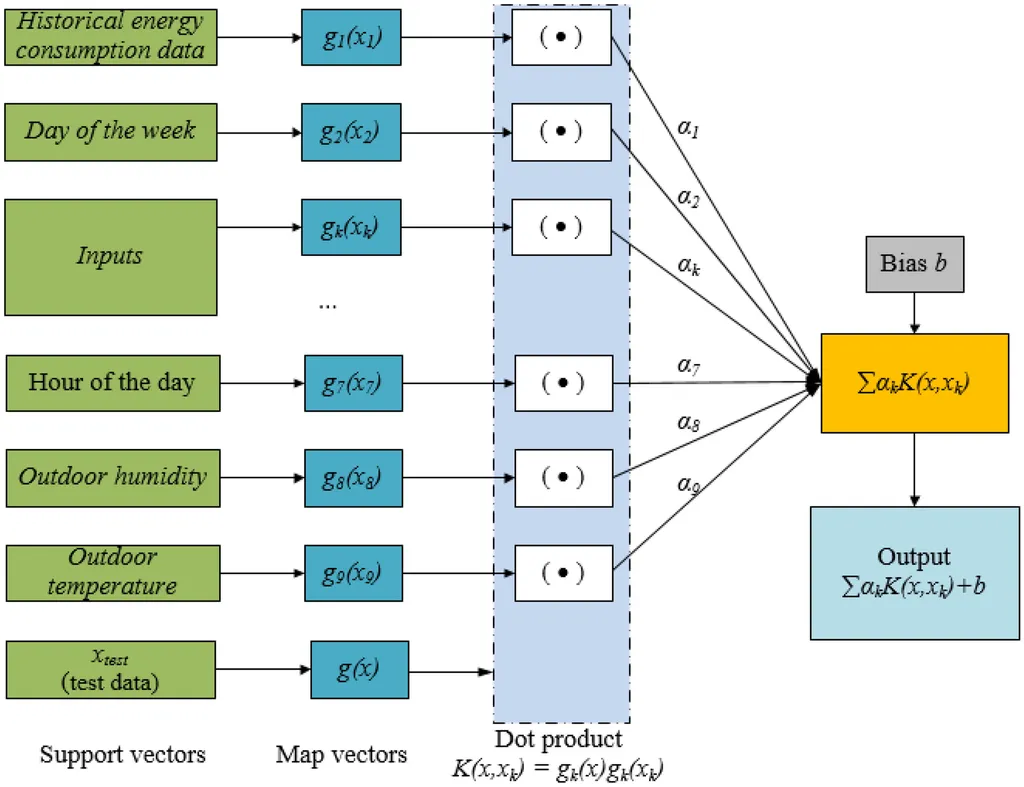
The research, published in the Journal of Engineering Science, introduces a hybrid predictive model based on stacking ensemble learning. This model integrates four machine learning algorithms—Support Vector Machine (SVM), Decision Tree (DT), K-Nearest Neighbors (KNN), and Random Forest (RF)—with a Backpropagation Neural Network (BP) serving as the meta-learner. To enhance predictive accuracy, the team employed six optimization algorithms to fine-tune the hyperparameters of the individual models. The result is the OP-Stacking hybrid model, which significantly outperforms its component models in terms of accuracy, generalization, and fitting performance.
The implications for the energy sector are profound. SFRC is widely used in the construction of energy infrastructure, including power plants, wind turbine foundations, and other critical structures. “By accurately predicting the compressive strength of SFRC, we can ensure the reliability and longevity of these structures, ultimately reducing maintenance costs and enhancing safety,” says Liu. The ability to predict long-term strength from short-term data also opens new avenues for project planning and execution, allowing engineers to make informed decisions faster and with greater confidence.
Beyond its predictive capabilities, the research also establishes an empirical relationship between the 7-day and 28-day compressive strengths of SFRC. This relationship, derived through linear regression analysis, enhances the practical utility of the framework by enabling reliable long-term strength predictions from early-stage data. The team has encapsulated the OP-Stacking hybrid model and the derived empirical formulas into a user-friendly predictive system developed using the Qt Framework. This tool supports both compressive strength prediction and intelligent mix proportion design for SFRC, providing essential technical support for large-scale projects like the Central Yunnan Water Diversion Project.
The commercial impacts of this research are far-reaching. By reducing the time and resources required for material testing, companies can accelerate their construction timelines and reduce costs. This efficiency gain is particularly valuable in the energy sector, where rapid and reliable infrastructure development is crucial for meeting global energy demands. “Our framework not only improves the efficiency of material testing but also enhances the overall quality and reliability of SFRC structures,” notes Liu. “This can lead to significant cost savings and improved project outcomes.”
As the energy sector continues to evolve, the demand for high-performance building materials will only grow. The research by Weihua Liu and his team represents a significant step forward in meeting this demand. By leveraging advanced machine learning techniques and optimization algorithms, they have developed a predictive framework that promises to reshape the future of construction and energy infrastructure. The publication of this work in the Journal of Engineering Science (工程科学学报) underscores its importance and potential impact on the field.
In the broader context, this research highlights the transformative potential of machine learning and artificial intelligence in engineering. As these technologies continue to advance, their applications in material science and construction are likely to expand, driving innovation and efficiency across the industry. The work of Weihua Liu and his team serves as a testament to the power of interdisciplinary collaboration and the potential for technology to solve real-world challenges. As the energy sector looks to the future, the insights and tools developed through this research will undoubtedly play a crucial role in shaping its trajectory.