
In the digital age, social media has become the town square of the 21st century, a place where information—and misinformation—spreads at lightning speed. Nowhere was this more evident than during the COVID-19 pandemic, a global health emergency that saw millions turn to platforms like Twitter and Facebook for real-time updates, emotional expression, and a sense of connection. But with this rapid flow of information came a deluge of misinformation and shifting patterns of discourse, a phenomenon that demanded systematic investigation. Enter Festus A. Omojowo, a researcher from the Department of Computer Science at the Federal University Lokoja, who has delved into the heart of this digital discourse to uncover how topics evolved on social media during the pandemic.
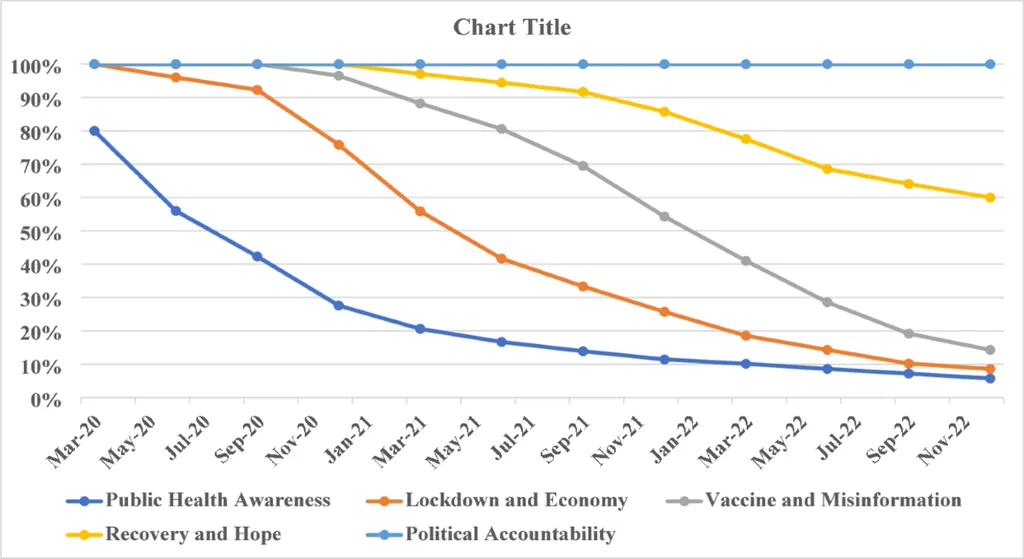
Omojowo’s study, published in the Journal of Electrical Systems and Information Technology (which translates to “Journal of Electrical Systems and Information Technology” in English), analyzed a dataset of 70,452 COVID-19-related tweets from Nigeria between March 2020 and December 2022. Using advanced Natural Language Processing (NLP) methods, including topic modeling (LDA and BERTopic), sentiment analysis (VADER and BERTweet), and geospatial trend analysis, Omojowo mapped the evolution of discourse and sentiment over time. The results were revealing, identifying five dominant thematic clusters: public health awareness, lockdown and economy, vaccine and misinformation, recovery and hope, and political accountability.
“This study provides a comprehensive view of how public sentiment and attention evolved in alignment with pandemic milestones,” Omojowo explained. “From lockdown enforcement to vaccine rollout and policy controversies, the discourse on social media mirrored the real-world challenges and responses to the pandemic.”
The implications of this research extend far beyond academia. For the energy sector, understanding how information and sentiment spread during crises can be invaluable. Energy companies often face public scrutiny and misinformation during emergencies, from power outages to fuel shortages. By monitoring social media discourse, energy providers can gain real-time insights into public concerns, enabling them to respond more effectively and proactively.
“Our hybrid analytical framework integrates sentiment and topic evolution modeling for infodemic monitoring,” Omojowo noted. “This can provide actionable insights for policymakers, communication strategists, and public health agencies to design adaptive and evidence-driven responses during global health emergencies.”
The study’s findings suggest that future developments in crisis communication and management could leverage similar NLP techniques to track and respond to public sentiment. For the energy sector, this could mean more effective crisis communication strategies, better public engagement, and ultimately, more resilient operations.
As we navigate an increasingly digital world, the ability to understand and respond to public discourse in real-time will be crucial. Omojowo’s research offers a roadmap for how this can be achieved, providing a powerful tool for managing information during global health emergencies and beyond. In the words of Omojowo, “By mapping discourse evolution across phases of a crisis, we can provide actionable insights for adaptive and evidence-driven responses.” This is not just about understanding the past; it’s about shaping a more informed and resilient future.