
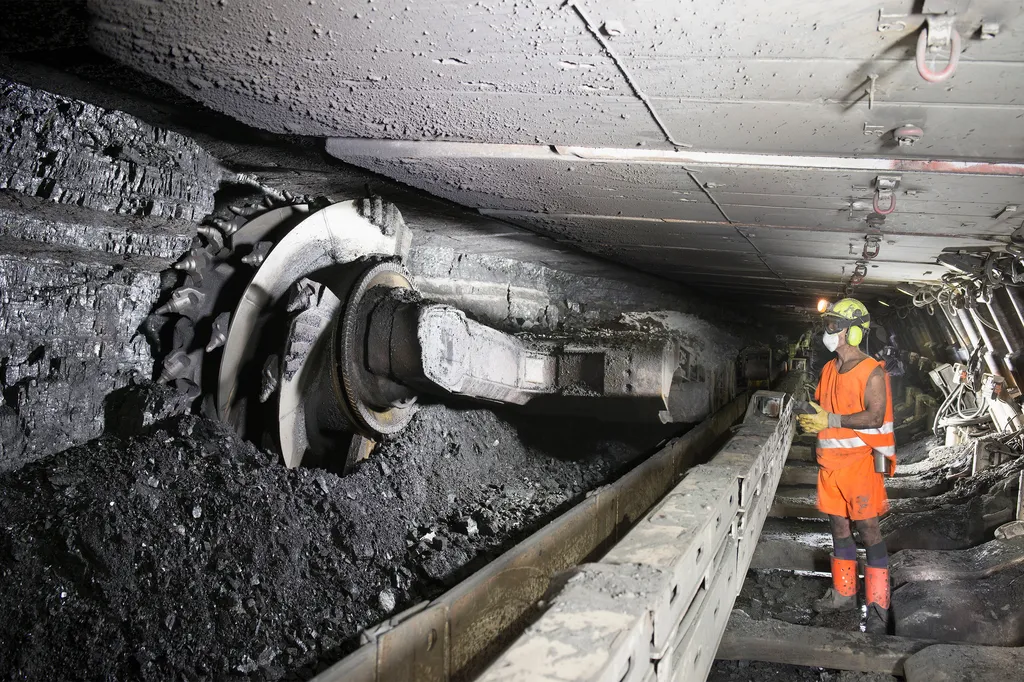
In the heart of China’s coal country, a technological revolution is brewing, one that could redefine the future of deep coal mining and bolster energy security. At the forefront of this transformation is Dr. Weipeng Shi, a researcher from the School of Earth and Environment at Anhui University of Science and Technology in Huainan. His groundbreaking work, published in the journal *Meitan kexue jishu* (translated as *Coal Science and Technology*), is harnessing the power of distributed optical fiber sensing (DOFS) to create a safer, more efficient mining landscape.
Coal remains the backbone of China’s energy security, but the challenges of deep mining are formidable. The “three highs and one low” problems—high ground stress, high gas content, high temperature, and low permeability—pose significant threats to safe and efficient coal extraction. Traditional detection methods, such as geological surveys and drilling, are costly, time-consuming, and often limited in scope. Enter DOFS, a technology that promises to revolutionize the way mines are monitored and managed.
DOFS offers a suite of advantages that make it uniquely suited to the harsh underground environment. “It provides distributed sensing, long-distance coverage, high-precision measurement, and anti-electromagnetic interference,” explains Dr. Shi. This means that mines can now monitor multiple parameters—stress, temperature, seepage, and vibration—in real time, significantly enhancing their ability to detect and mitigate hidden disaster-causing factors.
The technology leverages a range of sophisticated techniques, including fiber Bragg grating (FBG), optical time-domain reflectometry (OTDR), and Brillouin optical time-domain analysis (BOTDA), among others. Each method has its own strengths, and Dr. Shi’s research provides a comprehensive comparison of these technologies, helping mine operators select the most appropriate tools for their specific needs.
The commercial implications of this research are vast. By enabling real-time monitoring and early warning systems, DOFS can reduce the risk of catastrophic accidents, minimize downtime, and improve overall operational efficiency. This is particularly crucial for deep mining operations, where the stakes are higher and the margins for error are slimmer.
Dr. Shi’s work doesn’t stop at identifying the benefits of DOFS. He also proposes a conceptual model for a monitoring and early warning system based on a three-layer architecture: physical space, sensing space, and decision-making space. By integrating DOFS with artificial intelligence, this system aims to achieve intelligent matching and autonomous regulation, providing a robust framework for disaster early warning and smart mine construction.
The potential for this technology to shape the future of the energy sector is immense. As Dr. Shi puts it, “The integration of DOFS with artificial intelligence technology can achieve intelligent matching and autonomous regulation, thereby providing theoretical and technical support for mine disaster early warning and the construction of smart mines.” This could lead to a new era of smart mining, where data-driven decisions and real-time monitoring become the norm, ultimately enhancing safety and productivity.
For the energy sector, this means more than just improved safety and efficiency. It represents a step towards sustainable and responsible mining practices, which are increasingly important in a world grappling with climate change and environmental concerns. As the global demand for energy continues to grow, technologies like DOFS will play a pivotal role in meeting this demand while minimizing the environmental and human costs.
In the words of Dr. Shi, “This research provides a theoretical and technical foundation for the future of smart mines and energy security.” As we stand on the brink of this technological revolution, the future of deep coal mining looks brighter—and safer—than ever before.