
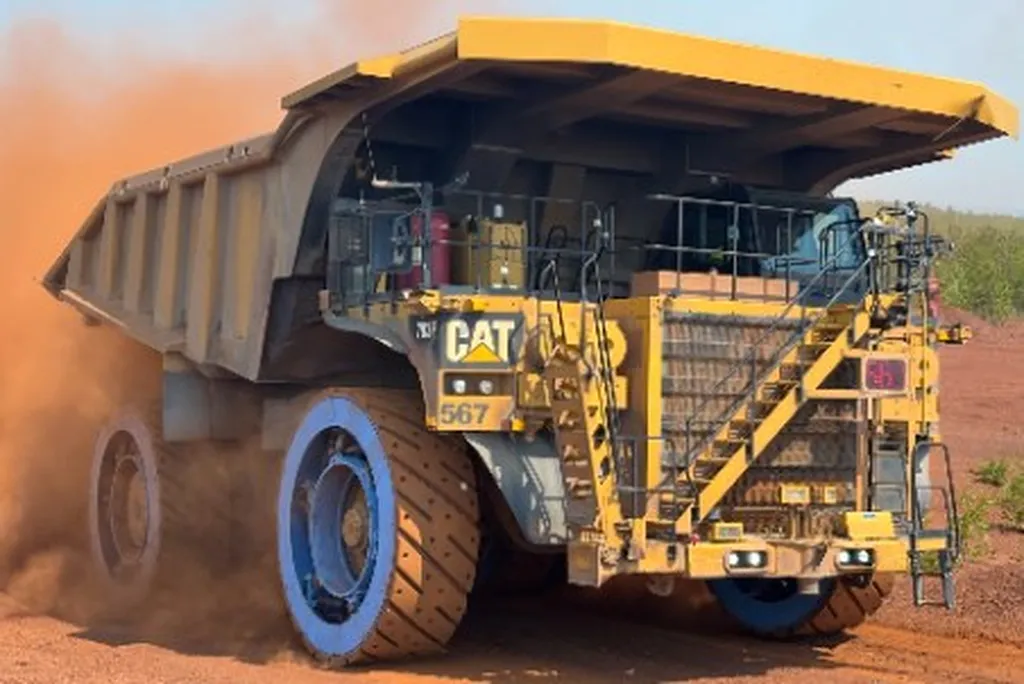
In the realm of transportation and mining technology, a groundbreaking study has emerged that could redefine how we understand the interaction between tires and road surfaces. Led by Maksym Balaka from the Kyiv National University of Construction and Architecture, this research delves into the intricate world of tire dynamics, offering insights that could revolutionize vehicle safety and efficiency.
The study, published in the journal “Mining, Construction, Road and Melioration Machines” (translated from Ukrainian), focuses on determining the rheological parameters of the “tire-road” system. Rheology, the study of flow and deformation of materials, is crucial in understanding how tires behave under various loads and conditions. Balaka’s work aims to provide a more accurate description of the complex interplay between tires and road surfaces, which involves a mix of elastic, viscous, and plastic deformation processes.
“Efficient and safe modern wheeled vehicles are largely determined by the reliable interaction of pneumatic tires with the supporting road or ground surface under various loading conditions,” Balaka explains. This interaction is influenced by a combination of deformation processes occurring both in the tire structure and the contact surface layer. To capture this complexity, Balaka and his team have developed advanced rheological models capable of replicating the nonlinear and time-dependent behavior of tire materials.
The research proposes both analytical and experimental methodologies to determine key rheological parameters such as stiffness, modulus of deformation, coefficient of viscous resistance, and characteristics of internal friction. These methods analyze the static and dynamic behavior of tire deformations and the spatial distribution of contact stresses in the interaction zone. The approach allows for the consideration of varying load levels and internal air pressure on the mechanical response of the tire.
The implications of this research are vast, particularly for the energy sector. By providing a more accurate understanding of tire dynamics, the study could lead to the development of more energy-efficient vehicles, reducing fuel consumption and emissions. This is particularly relevant for heavy-duty vehicles used in mining and construction, where fuel efficiency and safety are paramount.
“Obtained rheological parameters create a basis for building numerical models of the ‘tire-road’ system, ensuring accurate prediction of contact stresses, deformation patterns, and dynamic loads during vehicle operation,” Balaka notes. The proposed methods reduce experimental complexity and increase the accuracy of parameter determination, offering practical applications in tire design, motion dynamics optimization, and transportation engineering.
As the world continues to seek more sustainable and efficient transportation solutions, this research provides a crucial piece of the puzzle. By improving our understanding of tire behavior, we can pave the way for safer, more efficient, and environmentally friendly vehicles. The work of Maksym Balaka and his team is a testament to the power of scientific inquiry in driving technological advancement, and it will be fascinating to see how this research shapes the future of the transportation and energy sectors.