
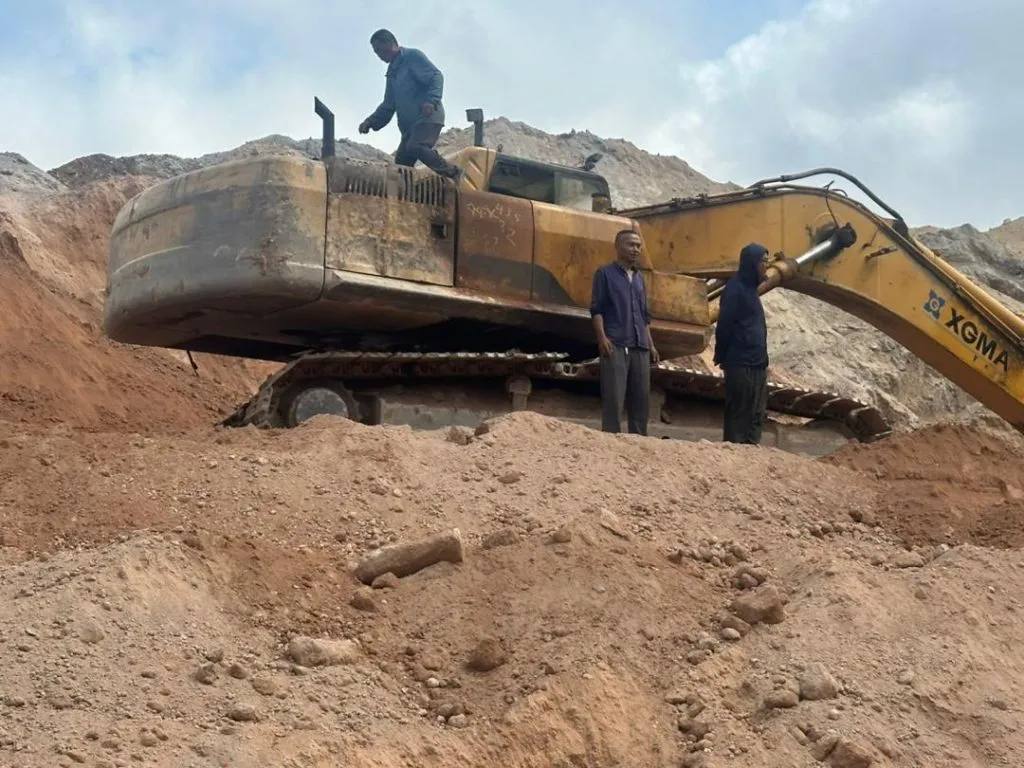
In a significant crackdown on illegal mining activities, Ghana’s National Inter-Ministerial Committee on Illegal Mining Operations and Security (NAIMOS) recently seized equipment and arrested a suspected ringleader during operations across several sites in the Amansie Central District. The operation, conducted last month, targeted contested mining areas legally owned by Asante Gold Corporation, which had allegedly been seized by illegal miners operating in various communities.
Authorities, acting on what they described as “hot intelligence,” managed to retake the contested area, although the illegal miners fled the scene. One suspected leader of the operation was arrested and is now facing prosecution while cooperating with police investigations. In a subsequent phase of the operation, NAIMOS officers dismantled several makeshift mining operations around Obuasi Airport, seizing equipment such as motorbikes, vehicles, and water pumps.
This operation is part of Ghana’s heightened efforts to combat “galamsey,” the local term for illegal small-scale gold mining. Galamsey has become a significant issue in Ghana, with approximately 40% of the country’s total gold output coming from small mines, according to Reuters. However, the practice poses severe risks not only to the miners themselves but also to the surrounding communities.
The dangerous nature of galamsey is underscored by the health hazards it presents. Miners and nearby residents are exposed to heavy metals like lead and mercury, which are released into the atmosphere and contaminate the water supply. The BBC reported that 4,726 hectares of land in seven of Ghana’s 16 regions, including 34 forest reserves, have been affected by illegal mining activities.
Ghana’s rich natural resources have been exploited for centuries, and the recent surge in illegal gold mining highlights the critical need for proper resource management. As the old adage goes, “There is no land in Ghana which doesn’t have gold, even in the top soil. Ghana is gold.” However, the exploitation of this finite resource by greedy businesspeople raises concerns about the long-term environmental and social impacts.
The communications directorate of the Ministry of Lands has encouraged local communities to cooperate with authorities in supporting anti-galamsey efforts. They urge citizens to report illegal mining operations, emphasizing the national campaign slogan: “Help stop galamsey now.”
This crackdown on illegal mining operations in Ghana could have far-reaching implications for the sector. It signals a strengthened commitment to enforcing regulations and protecting the environment and public health. The success of such operations may encourage other countries facing similar challenges to adopt more aggressive strategies in combating illegal mining.
Moreover, the focus on retaking contested areas legally owned by mining corporations like Asante Gold Corporation underscores the importance of respecting property rights and the rule of law. This could pave the way for more sustainable and responsible mining practices, benefiting both the industry and the local communities.
The environmental impact of illegal mining is a growing concern, and the Ghanaian government’s efforts to address this issue could serve as a model for other nations. By prioritizing the health and well-being of its citizens and the preservation of its natural resources, Ghana is taking a crucial step towards ensuring the long-term sustainability of its mining sector.
The recent operations by NAIMOS highlight the complex interplay between economic interests, environmental protection, and social responsibility. As the global demand for gold continues to rise, it is imperative that governments and mining companies work together to promote responsible mining practices and combat illegal activities that threaten the well-being of communities and the environment.