
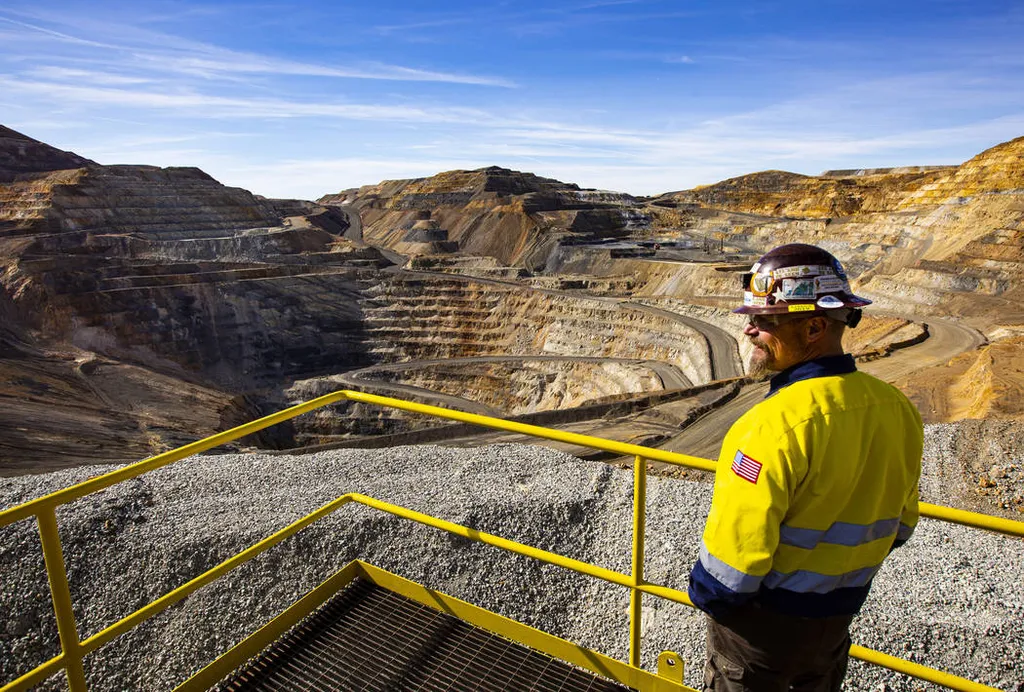
Gold, a metal that has long captured the American imagination, continues to play a significant role in the nation’s economy. While the days of the Gold Rush and prospectors with pickaxes are long gone, gold mining remains a vital industry in the United States. Today’s mining operations are characterized by advanced technology and large-scale extraction, often in the same mineral-rich regions that drew prospectors over a century ago.
The modern gold mining landscape in the U.S. is dominated by a handful of states, each contributing significantly to the nation’s gold supply. These states lead in production due to a combination of favorable geology, established mining systems, and consistent investment. Nevada, Colorado, and South Dakota are among the top contributors, with each state boasting substantial reserves and resources of the precious metal.
Nevada stands out as the U.S.’s largest gold-producing state, accounting for over 70% of the country’s annual output. The state is home to some of the world’s largest and most profitable mines, including the Carlin Trend, Cortez Trend, Goldstrike Mine, and Round Mountain Mine. Nevada’s mineralization is primarily associated with fault zones and sedimentary rock formations. The state has produced over 225 million ounces of gold since the mid-1800s, with Eureka, Elko, and Nye counties accounting for over 90% of its production. Nevada’s estimated reserves and resources are substantial, with over 100 million ounces and 200 million ounces, respectively.
Colorado, another major gold producer, is home to some of the largest and most productive mines in the U.S. The state’s mining industry focuses on large-scale industrial operations, with notable mines including the Cresson Mine, Phoenix Mine, and Fort Knox Mine. Colorado has produced over 44 million ounces of gold since the mid-1800s, with Teller, San Miguel, and Summit counties accounting for over 70% of its production. The state features an estimated reserve of over 6 million ounces and resources of over 20 million ounces.
South Dakota also boasts a rich gold mining history and significant reserves. The state’s mining industry is focused on large-scale industrial operations that use advanced mining techniques and equipment. Major mines in South Dakota include the Homestake Mine, Wharf Mine, and Golden Reward Mine. South Dakota has produced over 40 million ounces of gold since its first discovery, with Lawrence, Pennington, and Custer counties accounting for over 90% of its production. The state has significant reserves and resources, with estimated reserves of over 1 million ounces and resources of over 6 million ounces.
While Nevada, Colorado, and South Dakota are the top gold-producing states, other states like Wyoming, Montana, Idaho, Utah, Oregon, New Mexico, and Washington also contribute to the nation’s gold supply. These states have varying levels of production, with some focusing on large-scale mining operations and others on small-scale or recreational mining.
The concentration of gold mining in these states raises questions about the future of the industry. As technology advances and demand for gold remains steady, these states are likely to continue leading in production. However, the environmental and social impacts of large-scale mining operations are increasingly under scrutiny. Balancing economic benefits with sustainable practices will be a critical challenge for the industry moving forward.
Moreover, the dominance of a few states in gold production could have implications for the broader economy. Diversification of mining activities across more states could mitigate risks associated with regional economic fluctuations and ensure a more stable national gold supply. Additionally, investing in exploration and development in underutilized regions could uncover new reserves and resources, extending the lifespan of the industry.
In conclusion, the modern gold mining landscape in the U.S. is shaped by a combination of historical legacy and contemporary technological advancements. The dominance of a few states in production highlights the need for sustainable practices and economic diversification. As the industry evolves, it will be crucial to address these challenges to ensure a prosperous and responsible future for gold mining in the United States.