
In the heart of Türkiye, a groundbreaking discovery is reshaping our understanding of zinc-lead mineralization and opening new avenues for the energy sector. Emre Yildiz, a geologist from Hacettepe University’s Faculty of Engineering, has unveiled a metamorphosed sedimentary exhalative (SEDEX)-type mineralization in the Kırşehir Massif, a finding that could significantly impact future mining and exploration strategies.
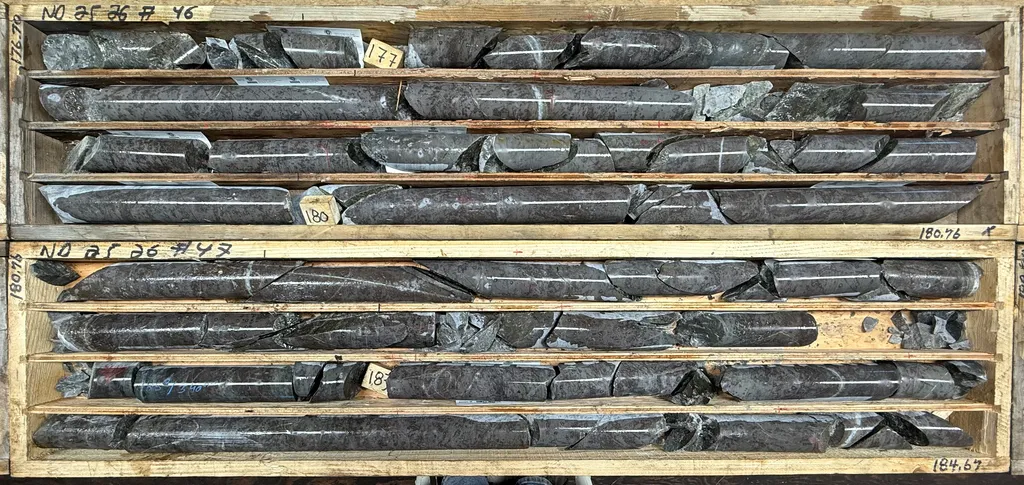
The Uzunpınar (Boztepe-Kırşehir) Zn-Pb±Cu mineralization, as Yildiz’s research dubs it, is nestled within the ancient gneiss and marbles of the Paleozoic Kalkanlıdağ Formation. This mineralization, stretching approximately 1,850 meters in a northeast-southwest direction, is not just a single vein but a complex of six distinct mineralization levels. These horizons, each with unique characteristics and thicknesses ranging from 3.1 to 32.10 meters, are hosted within gneisses and marbles, hinting at a rich geological history.
Yildiz’s work, published in the Bulletin of the Mineral Research and Exploration (Maden Tetkik ve Arama Dergisi in Turkish), reveals that the mineralization is composed of ore bands and disseminations, with thicknesses varying from 0.1 to 8 cm, aligned parallel to the foliation. The ore minerals identified include sphalerite, galena, chalcopyrite, and minor scheelite, while gangue minerals comprise pyrite, marcasite, pyrrhotite, gahnite, and Ba-feldspar.
The significance of this discovery lies in its implications for the energy sector. SEDEX deposits are known for their large size and high metal content, making them highly valuable for mining operations. The fact that this mineralization has undergone metamorphism together with its host rocks suggests that similar deposits could be hidden within other metamorphic terrains, waiting to be discovered.
“This discovery is a game-changer,” Yildiz asserts. “It challenges the conventional wisdom that SEDEX deposits are only found in sedimentary basins. The metamorphic overprint on this mineralization suggests that similar deposits could be hidden within other metamorphic terrains, opening up new exploration frontiers.”
The commercial impacts of this research are substantial. As the demand for zinc and lead continues to grow, driven by their essential roles in energy storage, construction, and manufacturing, the discovery of new, high-quality deposits becomes increasingly important. The Uzunpınar mineralization, with its stratiform geometry and syngenetic origin, could serve as a model for future exploration and mining activities.
Moreover, the research highlights the importance of understanding the geological history of mineral deposits. As Yildiz explains, “The alignment of ore bands with the host rock foliation, the presence of coarse-grained euhedral opaque minerals, foam textures, gahnite, Ba-feldspar, and the high Fe content in sphalerites all point to the influence of metamorphism on the mineralization. This understanding is crucial for developing effective exploration and mining strategies.”
In conclusion, Emre Yildiz’s research on the Uzunpınar (Boztepe-Kırşehir) Zn-Pb±Cu mineralization is a significant step forward in our understanding of zinc-lead mineralization and its potential for the energy sector. By challenging conventional wisdom and opening new exploration frontiers, this work is set to shape the future of mining and geological research.