
The Metals Company’s recent stock surge, despite its ongoing losses and lack of profitability until at least 2027, underscores the volatile and speculative nature of the deep-sea mining industry. The company’s dramatic rise from $0.55 to $7.89 per share in a single year reflects broader geopolitical shifts and the U.S. government’s aggressive push to secure critical minerals, driven largely by President Donald Trump’s administration. This development raises significant questions about the future of the mining sector, environmental consequences, and the role of international regulations.
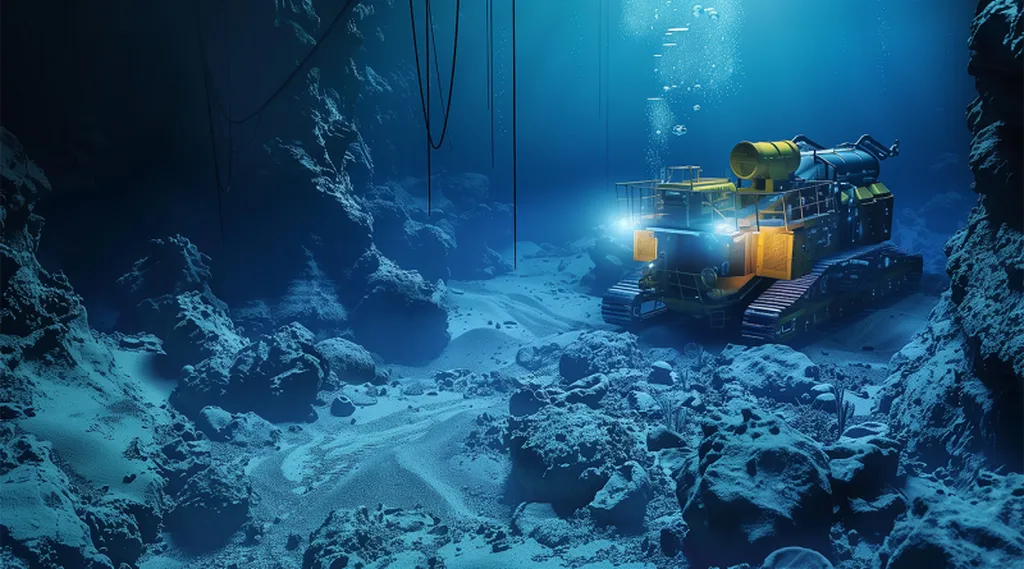
The Metals Company has invested heavily in research and development, aiming to pioneer technology for extracting minerals like cobalt, copper, and nickel from the ocean floor. These minerals are crucial for modern technologies, including electric vehicles, consumer electronics, and military applications. However, the company’s journey has been fraught with challenges, including regulatory uncertainty and environmental concerns. The stock’s recent rebound suggests that investors are betting on the company’s long-term potential, despite its current financial struggles.
The Trump administration’s approach to deep-sea mining has been characterized by a disregard for international norms and a willingness to override scientific and Indigenous concerns. In April, Trump asserted the U.S.’s right to mine in international waters, bypassing the United Nations’ ongoing process to regulate deep-sea mining through the International Seabed Authority (ISA). This move has sparked global outrage and undermined years of negotiations involving Indigenous environmental advocates from the Pacific region.
Solomon Kahoʻohalaha, a Native Hawaiian advocate, highlighted the cultural and environmental significance of the ocean to Indigenous peoples. “As navigators of Oceania, we are often met with adverse conditions,” he said. “The conditions that are presented to us may be adverse, but we understand how to navigate through them, around them, and redirect our sails.” This sentiment reflects the broader resistance from Indigenous communities and environmental scientists who warn about the potential ecological damage from deep-sea mining.
Scientific research has shown that deep-sea mining can have lasting environmental impacts. A study in the United Kingdom found that a seabed mining site in the Clarion-Clipperton Zone had not fully recovered more than four decades after an expedition. Another study in Hawaiʻi revealed that sediment released by mining tests weakened the ocean food web, and a separate study found a significant decline in sea creatures after mining activities.
The Metals Company has funded much of this research but has downplayed the environmental risks, frustrating advocates like Sheila Babauta, an Indigenous Chamorro-Pohnpeian resident of the Commonwealth of the Northern Mariana Islands (CNMI). Babauta chairs the board of Friends of the Marianas Trench, a community group supporting the protection of the Marianas Trench Marine National Monument. She criticized the Trump administration’s approach, stating, “I refuse to accept that the waters around us belong to the U.S. It is the Indigenous peoples of this land, of Micronesia, that have the historic connection and roots to this part of the world.”
The Trump administration’s decision to limit the public comment period on mining proposals has further alienated local communities. Despite requests from political leaders in the CNMI and Guam for a 120-day extension, the administration approved only a 30-day extension. This reflects a pattern of limiting public input and fast-tracking extraction projects, raising concerns about transparency and democratic engagement.
The Metals Company’s stock surge and the Trump administration’s aggressive push for deep-sea mining highlight the complex interplay between economic interests, geopolitical strategies, and environmental concerns. As the industry moves forward, it will be crucial to balance the need for critical minerals with the preservation of marine ecosystems and the rights of Indigenous peoples. The coming years will likely see intense debates and legal battles over the future of deep-sea mining, shaping the development of the sector and its impact on the planet.