
In the heart of Egypt, a groundbreaking study is reshaping how we understand and protect our most precious resource: groundwater. Dr. Kamilia Hagagg, a leading researcher at the Nuclear and Radiological Research Centre of the Egyptian Atomic Energy Authority (EAEA), has pioneered an innovative framework that combines stable isotopes and an indexed approach to assess groundwater contamination risks. This research, recently published in the esteemed journal *Scientific Reports* (translated to English as “Scientific Reports”), is set to revolutionize groundwater management, particularly in industrially stressed regions.
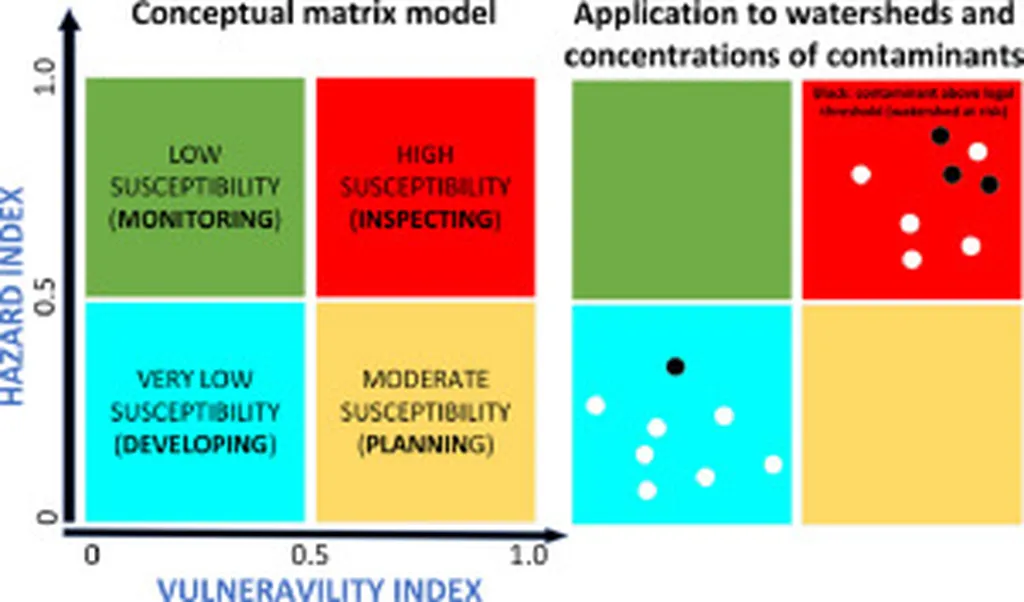
Groundwater vulnerability has long been a critical concern for industries, especially those in the energy sector. Contamination can lead to costly remediation efforts, operational disruptions, and environmental damage. Dr. Hagagg’s study introduces a two-dimensional vulnerability mapping approach, integrating a modified GOD index and δ1⁸O stable isotope tracer. This method enables a comprehensive evaluation of both vertical and lateral contaminant transport within aquifer systems.
“The integration of stable isotopes and geospatial pollutant loading indicators provides a nuanced understanding of groundwater dynamics,” explains Dr. Hagagg. “This approach allows us to identify high-risk zones and anticipate contamination threats, which is crucial for industries relying on groundwater resources.”
The study’s findings are particularly relevant for the energy sector, where groundwater is often used in various processes, from cooling to hydraulic fracturing. By identifying pollution sources and loading potential through remote sensing, land use classification, and hydrochemical data interpretation, industries can prioritize high-risk zones and implement targeted protection strategies.
One of the most compelling aspects of Dr. Hagagg’s research is the use of Principal Component Analysis (PCA) to extract dominant components influencing groundwater quality. The study identified five key components: geogenic, anthropogenic, salinity-driven, redox-related, and agricultural. These components explain the spatial and temporal patterns of groundwater quality deterioration, offering valuable insights for industries operating in diverse environmental conditions.
“The δ1⁸O values ranged from 5.89 to -8.62‰, indicating diverse recharge mechanisms and pollutant retardability,” Dr. Hagagg notes. “This information is crucial for understanding groundwater/surface water interactions and assessing lateral migration risks.”
The GOD index values, ranging from 0.04 to 0.28, classified the study area predominantly within negligible to medium vulnerability zones. However, the research also highlighted that clay-rich sectors exhibited high natural protectability, while industrial impacted zones showed increased susceptibility. This nuanced understanding is essential for industries looking to minimize their environmental footprint and ensure sustainable operations.
Dr. Hagagg’s framework supports evidence-based land use planning, targeted monitoring, and adaptive management. By integrating established tools, the study improves groundwater risk characterization and contributes to the long-term sustainability of aquifer systems in environmentally complex and industrially stressed regions.
As the energy sector continues to evolve, the need for robust groundwater management strategies becomes increasingly apparent. Dr. Hagagg’s research offers a promising path forward, providing industries with the tools they need to protect this vital resource. With the publication of this study in *Scientific Reports*, the scientific community and industry professionals alike are poised to benefit from these groundbreaking insights.
In the words of Dr. Hagagg, “This research is not just about understanding groundwater vulnerability; it’s about empowering industries to take proactive steps towards sustainable resource management.” As we look to the future, the integration of stable isotopes and geospatial analysis is set to play a pivotal role in shaping groundwater protection strategies, ensuring a more resilient and sustainable energy sector.