
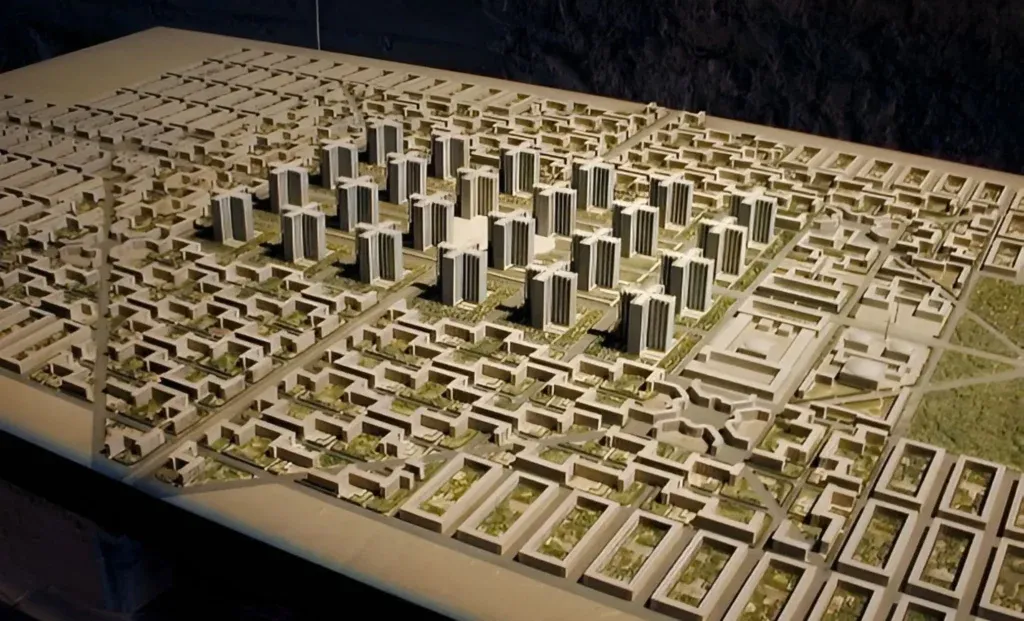
In the heart of India’s rapidly urbanizing landscape, a groundbreaking study is reshaping how we think about public spaces and their role in creating sustainable, inclusive cities. Led by P. Upadhyay from L J University in Ahmedabad, this research, published in the ‘Annals of the Photogrammetry, Remote Sensing and Spatial Information Sciences’ (a journal focused on advancements in geospatial technologies), is a beacon of innovation, merging geospatial technology with participatory governance to revitalize urban commons.
Upadhyay’s work is a response to the dynamic evolution of Indian urban environments, where public spaces are increasingly recognized as urban commons—critical to shaping cities that are not only sustainable but also resilient and inclusive. The study draws from global frameworks, such as the NSW Guide to Activation and the UN National Urban Policy Guidelines, to integrate geospatial methodologies like GIS-based spatial analysis and urban morphology modeling. These tools assess the accessibility, equity, and performance of urban public spaces, offering a data-driven approach to urban planning.
“Public spaces are the lifeblood of our cities,” Upadhyay explains. “They are where communities come together, where culture thrives, and where the vibrancy of urban life is palpable. But too often, these spaces are underutilized or poorly managed, leading to fragmentation in our urban landscapes.”
The study delves into case studies from around the world, from Jaipur’s cultural Chaupatis to the adaptive reuse of Seattle’s Gas Works Park and Paris’s Promenade Plantée. These examples reveal best practices in design, management, and community-driven place-making, emphasizing the importance of cross-sectorial collaboration and inclusive policy frameworks.
One of the most compelling aspects of Upadhyay’s research is its emphasis on digital tools for monitoring and co-creating sustainable urban commons. This is where the energy sector can take note. As cities become smarter and more interconnected, the role of digital infrastructure in managing public spaces becomes increasingly vital. From energy-efficient lighting to smart waste management systems, the integration of digital tools can significantly enhance the sustainability and functionality of urban commons.
“By aligning environmental impact assessments, urban sociology, and frontier spatial technologies, we can create a holistic framework that addresses fragmentation in urban landscapes and promotes heritage-sensitive interventions,” Upadhyay says. This approach aims to inform Smart City missions and urban renewal programs, fostering socio-economic vibrancy and equitable green urbanism.
The implications for the energy sector are profound. As cities strive to become more sustainable, the demand for innovative energy solutions tailored to public spaces will grow. This research provides a roadmap for integrating these solutions into urban planning, ensuring that public spaces are not only vibrant and inclusive but also energy-efficient and sustainable.
Upadhyay’s work is a call to action for urban planners, policymakers, and energy sector professionals to collaborate and leverage geospatial technologies to create public spaces that are truly commons—spaces that belong to and are shaped by the communities they serve. As Indian cities continue to evolve, this research offers a vision for a future where urban commons are the cornerstone of sustainable, inclusive, and resilient urban environments.
In the words of Upadhyay, “The future of our cities lies in our ability to create public spaces that are not just functional but also meaningful, spaces that reflect the diversity and vibrancy of our communities.” This research is a significant step towards making that vision a reality, and its impact will be felt far beyond the borders of India, shaping the future of urban commons worldwide.