
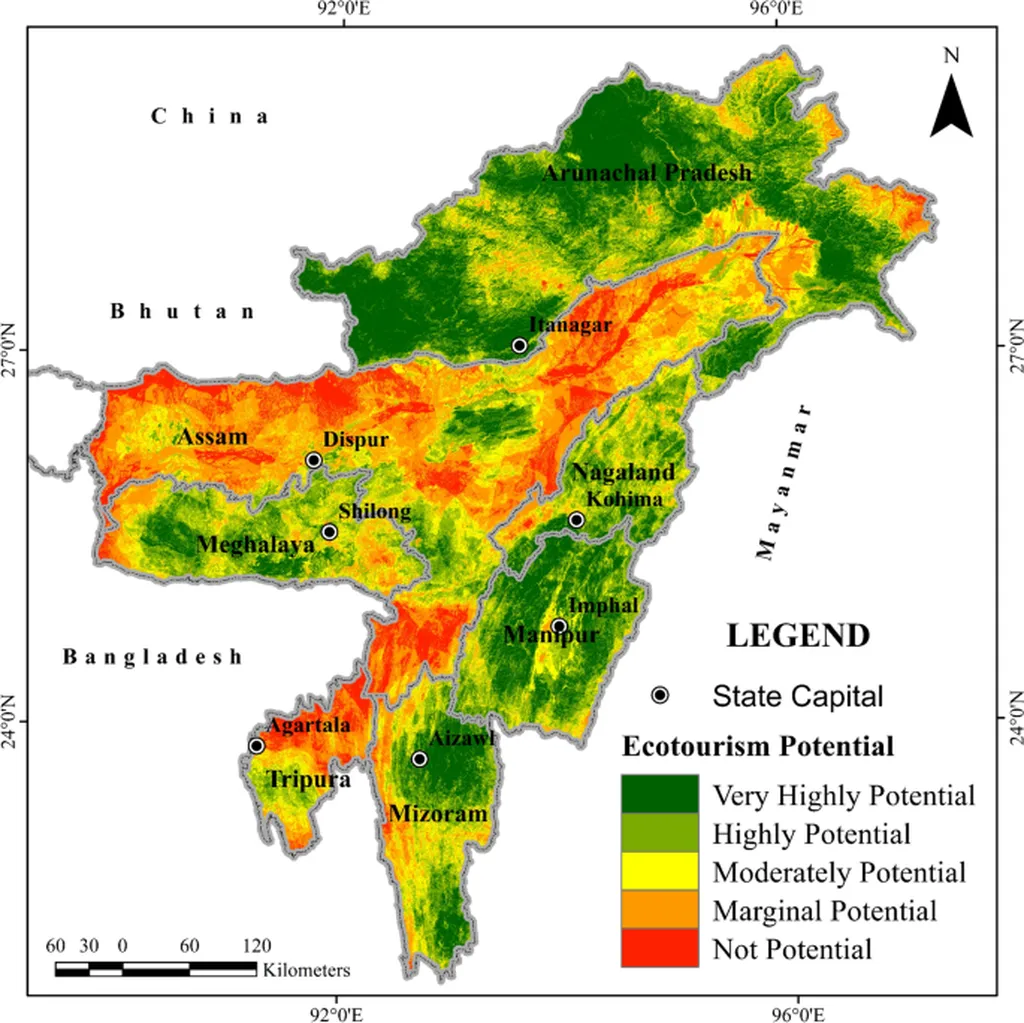
In the heart of India’s rapidly evolving tourism sector, a groundbreaking study is leveraging geospatial insights to revolutionize tourism planning. Led by A. Upadhyay from L.J. University in Ahmedabad, this research is transforming how we understand and enhance the country’s tourism landscape, with significant implications for regional development and visitor experiences.
India’s tourism landscape has seen a remarkable transformation over the past two decades, driven by a series of national schemes and missions initiated by the Ministry of Tourism. From the iconic “Incredible India” campaign to the more recent “Dekho Apna Desh” initiative, these programs reflect a strategic convergence of policy, technology, and cultural preservation. Upadhyay’s research, published in the ‘ISPRS Annals of the Photogrammetry, Remote Sensing and Spatial Information Sciences’ (translated as the Annals of Photogrammetry, Remote Sensing and Spatial Information Sciences), delves into the spatial dynamics of these schemes, offering a locational perspective that could redefine tourism planning.
The study highlights how schemes like PRASAD and Swadesh Darshan have focused on spatial integration, fostering connectivity and infrastructure in culturally significant yet geographically dispersed regions. “By integrating geospatial insights into tourism policy, we can enhance visitor experiences and support regional development,” Upadhyay explains. This approach not only promotes unique state-level tourism identities but also emphasizes regional development through targeted projects.
One of the key findings of the research is the importance of a locational lens in sustainability. The National Strategy for Sustainable Tourism and STCI indicators advocate for low-emission zones, circular resource use, and preservation of fragile landscapes. Initiatives like “HRIDAY” and “Innovative Approaches” have focused on enhancing heritage towns and exploring niche tourism types, many of which are highly place-specific.
The ongoing study reveals that integrating geospatial insight into tourism policy would enhance visitor experience and support regional development. This research is not just about mapping and monitoring; it’s about understanding the spatial-temporal dynamics of tourism schemes and deriving future tourism planning potential. By doing so, it paves the way for more informed decision-making and strategic investments in the tourism sector.
The commercial impacts of this research are profound. For the energy sector, understanding tourism patterns and their spatial dynamics can inform infrastructure development and resource allocation. For instance, the identification of tourism clusters and circuit-level connectivity can guide the development of sustainable energy solutions tailored to specific regions. This could lead to more efficient energy use, reduced emissions, and enhanced visitor experiences.
As Upadhyay’s research continues to unfold, it promises to shape the future of tourism planning in India and beyond. By leveraging geospatial insights, we can create a more sustainable, inclusive, and dynamic tourism sector that benefits both visitors and local communities. The integration of geospatial technology into tourism policy is not just a trend; it’s a transformative approach that could redefine the way we think about and experience tourism.