
In the heart of India, where monsoons and heavy traffic conspire to wear down roads, a groundbreaking approach to road damage detection is emerging, promising to revolutionize infrastructure maintenance and urban planning. P. Jayhind Pardeshi, a researcher from the Geographic Information System (GIS) Cell at Motilal Nehru National Institute of Technology Allahabad, has pioneered a lightweight, patch-based self-supervised learning framework that could redefine how we monitor and maintain our transportation networks.
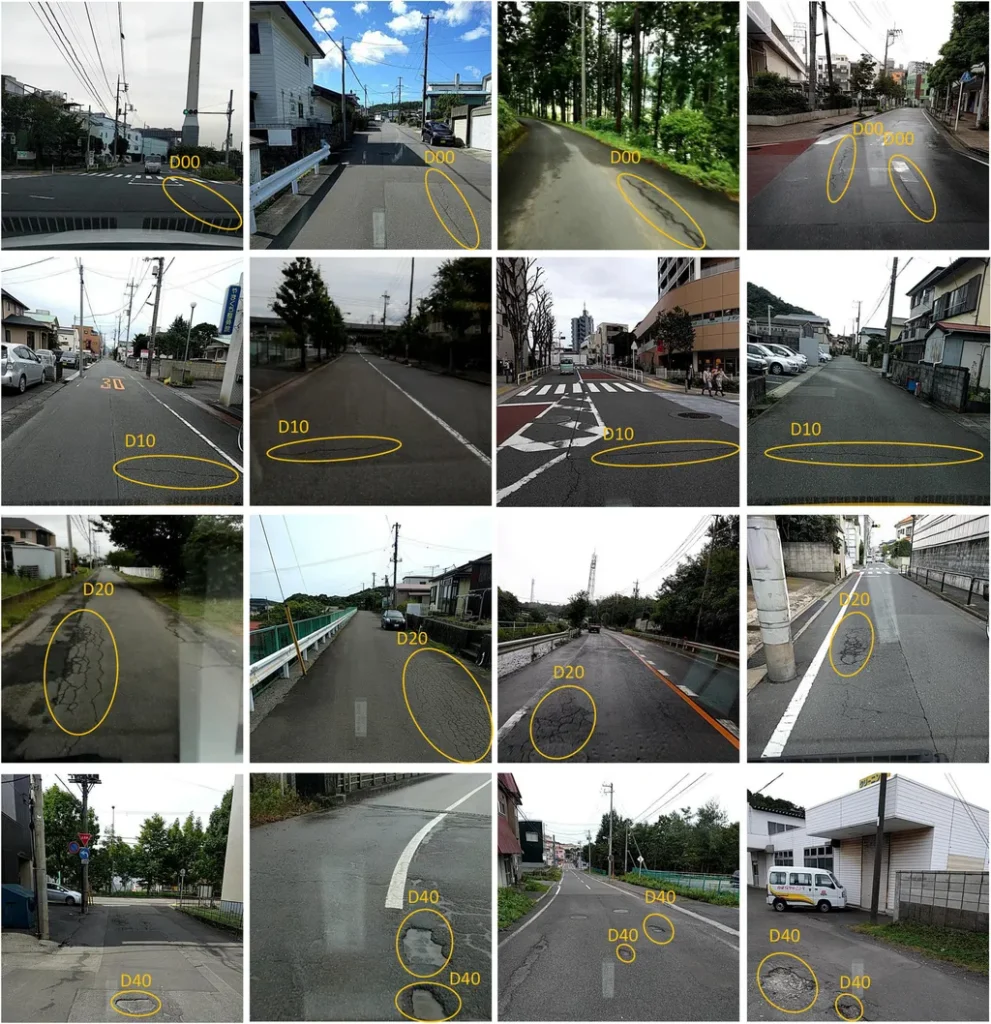
Pardeshi’s work, published in the ‘ISPRS Annals of the Photogrammetry, Remote Sensing and Spatial Information Sciences’ (Annals of Photogrammetry, Remote Sensing and Spatial Information Sciences), focuses on the Road Damage Detection 2022 (RDD2022) dataset, specifically tailored to Indian road conditions. The study addresses a critical need: “Manual inspection is resource-intensive and non-scalable,” Pardeshi explains. “Our approach aims to automate this process, making it more efficient and cost-effective.”
The framework leverages MobileNetV2, a lightweight neural network architecture known for its fast convergence and compatibility with edge devices. This makes it particularly suitable for deployment in low-resource settings, a common challenge in developing countries. The methodology involves four key stages: image patching, self-supervised learning (SSL) pretraining with augmentation, supervised fine-tuning on labeled patches, and evaluation.
SSL is a game-changer in this context. It enables representation learning from unlabeled data, which is crucial in domains with limited annotations. “SSL allows us to capture localized damage features, improving performance under intra-class imbalance,” Pardeshi notes. This is particularly important in regions like India, where road conditions can vary widely from one area to another.
The proposed model achieves an impressive 78% overall accuracy and a weighted F1-score of 78% on the test set. Training accuracy improves steadily over 25 epochs, reaching over 91%, while validation accuracy stabilizes at approximately 78%. These results are competitive with standard CNN architectures, but without the need for large pretrained models or high-end computational resources.
The implications for the energy sector are significant. Efficient road maintenance can reduce fuel consumption and vehicle emissions, contributing to a more sustainable transportation infrastructure. Moreover, the ability to perform real-time inference and geospatial integration opens up new possibilities for infrastructure monitoring and urban planning.
Pardeshi’s work is not just about detecting potholes and cracks; it’s about building a smarter, more resilient infrastructure. “This approach supports real-time inference, geospatial integration, and potential applications in infrastructure monitoring and urban planning,” he says. “It’s a step towards a more proactive and efficient maintenance strategy.”
As we look to the future, Pardeshi’s research offers a glimpse into a world where technology and infrastructure work hand in hand to create safer, more efficient transportation networks. It’s a vision that could shape the future of road maintenance, not just in India, but around the globe.