
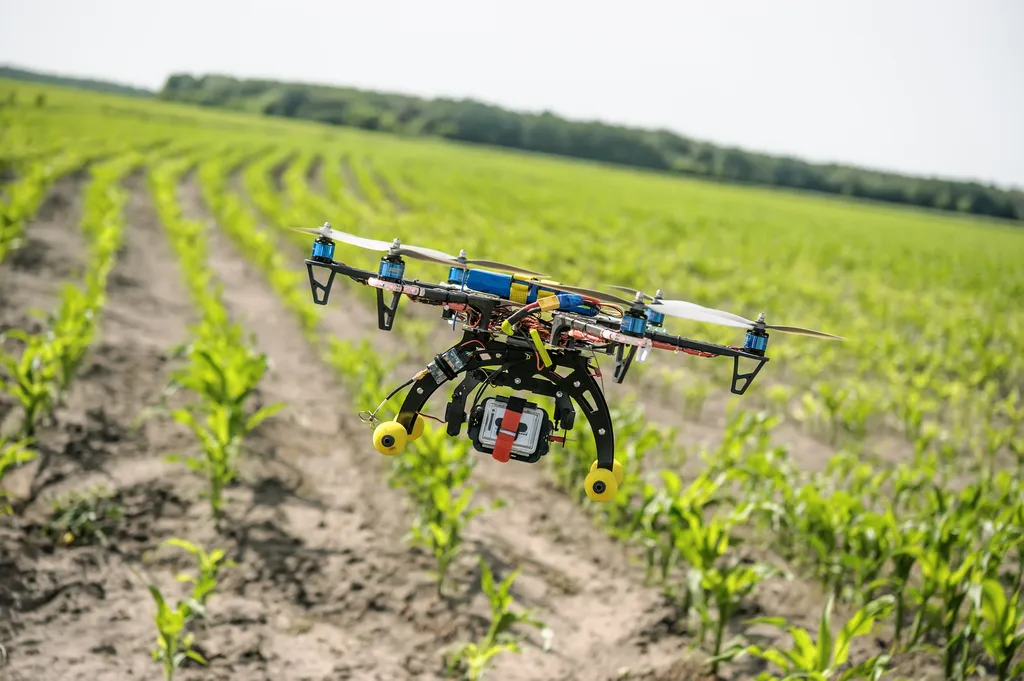
In the lush landscapes of Ranong, Thailand, a technological revolution is taking root, quite literally. Morakot Worachairungreung, a researcher from the Geography and Geo-Informatics Program at Suan Sunandha Rajabhat University in Bangkok, is harnessing the power of Unmanned Aerial Vehicles (UAVs) and advanced deep learning to transform how we monitor and manage agricultural resources. Her work, recently published in the journal *Geocarto International* (which translates to *International Geocarto*), is not just about mapping trees; it’s about reshaping the future of precision agriculture and, by extension, the energy sector.
Worachairungreung’s study focuses on using UAVs to capture high-resolution images of tree crops—durian, mangosteen, and palm—and built-up structures. The real magic happens when these images are fed into a deep learning model called YOLOv5 (You Only Look Once, version 5). This model is designed to detect and classify objects with remarkable accuracy. “The model’s ability to identify and differentiate between various tree species and structures is a game-changer,” Worachairungreung explains. “It’s not just about seeing the trees; it’s about understanding their economic value and managing them efficiently.”
The study involved six plots of land, categorized into five classes: homes, oil palms, fruit trees, and juvenile oil palms. From 700 labeled images, the YOLOv5 model achieved over 80% accuracy in most cases. The detection was particularly accurate for homes, oil palms, and fruit trees. However, the model struggled slightly with young oil palms, likely due to their visual similarity to other young trees and class imbalance. “This is an area we’re actively improving,” Worachairungreung notes. “The goal is to refine the model to handle these nuances better.”
So, why does this matter for the energy sector? The answer lies in the broader implications of precision agriculture. Oil palms, for instance, are a crucial source of biodiesel, a renewable energy source. Accurate monitoring of oil palm plantations can optimize yield and ensure sustainable practices. “By using UAVs and deep learning, we can make data-driven decisions that enhance productivity and sustainability,” Worachairungreung says. “This technology can help us balance economic growth with environmental stewardship.”
The commercial impacts are substantial. Farmers and agribusinesses can use this technology to monitor crop health, detect diseases early, and plan harvests more effectively. Energy companies can ensure a steady supply of biomass for biofuels, reducing reliance on fossil fuels. “This is just the beginning,” Worachairungreung adds. “As the technology evolves, we can expect even more sophisticated applications, from automated harvesting to real-time monitoring of soil health.”
The research published in *Geocarto International* is a testament to the potential of UAVs and deep learning in transforming agriculture and energy. It’s a reminder that technology is not just about innovation; it’s about solving real-world problems and creating a sustainable future. As Worachairungreung’s work shows, the sky is not the limit—it’s just the beginning.