
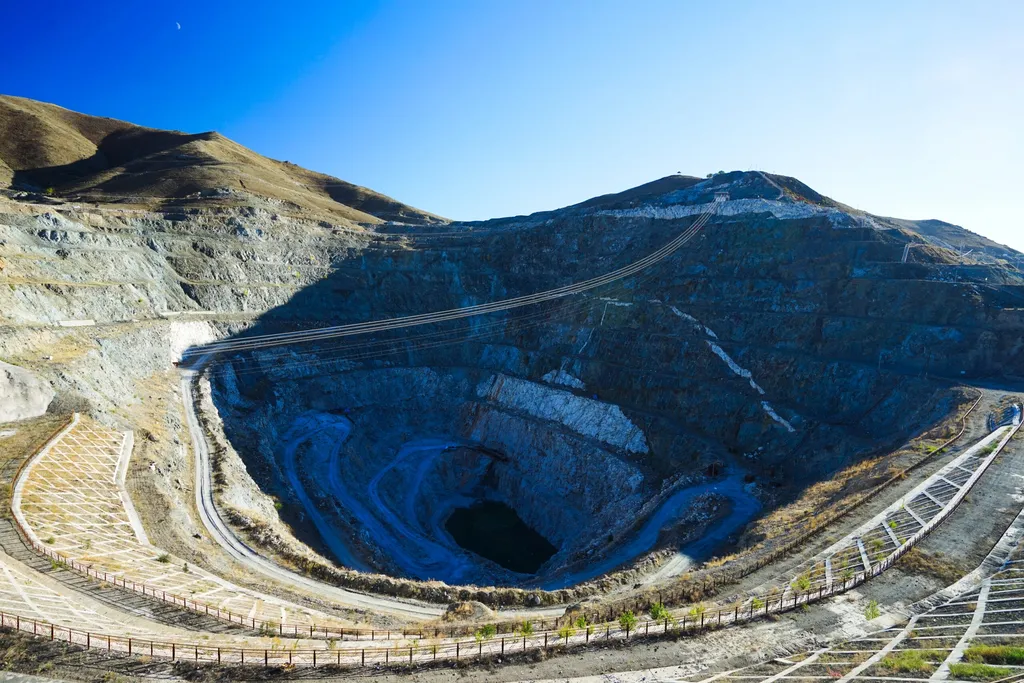
Chinese scientists have developed a groundbreaking method for mining rare earth metals that promises to significantly reduce environmental impact while increasing efficiency. This innovation, based on electric fields, has achieved a remarkable 95% rare earth recovery rate, slashing mining time by 70% and cutting electricity use by 60%. The method also boasts a 95% reduction in ammonia emissions compared to conventional techniques, according to a study published in the peer-reviewed journal Nature Sustainability.
Rare earth elements (REEs), particularly heavy REEs (HREEs), are crucial for the global transition to a decarbonized world. They are essential components in low-carbon technologies, including magnets for wind turbines, catalytic converters, and batteries. However, traditional mining methods have been criticized for their disastrous environmental record, involving the injection of concentrated ammonium-salt solutions that lead to harmful emissions, water contamination, and soil degradation.
The new electrokinetic mining (EKM) technique, developed by the Chinese Academy of Sciences (CAS) Guangzhou Institute of Geochemistry, addresses these issues. The method involves applying an electric field to the mining site, causing the rare earth elements to move towards a collection well for recovery. While leaching agents are still used, the amount required is greatly reduced.
The team tested the EKM technique at a mining site in Meizhou, South China, demonstrating its scalability for industrial application. A rigorous environmental risk assessment revealed a 95% reduction in ammonia emissions, indicating a significantly reduced environmental footprint. Groundwater quality around the mining site remained stable after four months of application, suggesting no leakage occurred during the test.
Compared to conventional mining methods, which have a recovery efficiency of only 40 to 60%, the EKM technique achieved a 95.5% recovery efficiency within 60 days. Conventional techniques also lead to the co-leaching of other metallic elements, incurring further costs for purification and separation. To mitigate the erosive environment of mines, the team developed a new plastic-based electrode that reduces corrosion while maintaining high conductivity.
While the production cost of obtaining 1 tonne of ore through the new method is slightly higher than conventional methods, the team asserts that the cost is roughly comparable when considering the reduced costs associated with chemical agents. When environmental costs are factored in, the conventional technique’s production cost is three times greater than that of the EKM technique.
This innovation could reshape the rare earth mining sector, offering a more sustainable and efficient alternative to conventional methods. As the world increasingly turns to low-carbon technologies, the demand for rare earth metals is set to rise. The EKM technique could help meet this demand while minimizing environmental impact, contributing to the global shift towards a low-carbon economy.
The development of this new mining method also highlights China’s continued leadership in the rare earth sector. As the largest producer of rare earth metals, China’s adoption of more sustainable mining practices could set a precedent for the rest of the world. The EKM technique’s success could spur further innovation in the sector, driving the development of even more efficient and environmentally friendly mining methods.
Moreover, the EKM technique’s potential to reduce production costs could make rare earth metals more accessible, fostering growth in industries that rely on these critical elements. This could lead to advancements in technology, furthering the global transition to a decarbonized world.
In conclusion, the development of the EKM technique represents a significant step forward for the rare earth mining sector. By offering a more sustainable and efficient alternative to conventional mining methods, this innovation could reshape the sector, driving growth and contributing to the global shift towards a low-carbon economy. As the world grapples with the challenges posed by climate change, the EKM technique offers a glimmer of hope, demonstrating that progress and sustainability can go hand in hand.