
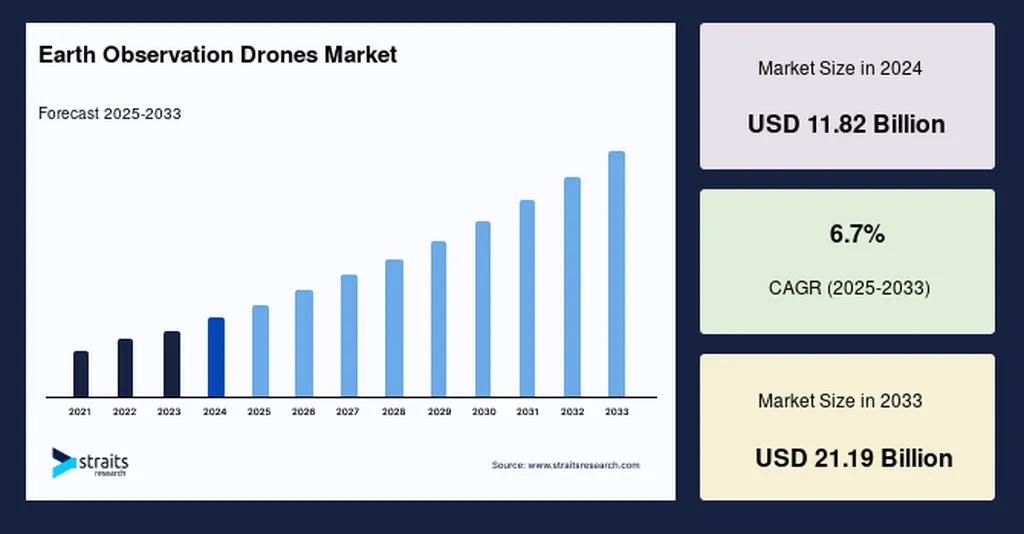
In the rapidly evolving world of geospatial technology, a groundbreaking study has emerged that could reshape how industries, particularly energy, harness the power of unmanned aerial vehicles (UAVs) for Earth observation. Published in *Geocarto International* (which translates to “International Journal of Geospatial Information Science”), the research, led by Shengxue Ke of Power China Northwest Engineering Corporation Limited in Xi’an, offers a comprehensive look at the advancements, challenges, and future trends in UAV-based Earth observation from 2000 to 2024.
The study, which analyzed over 10,500 publications, reveals how UAV technology has revolutionized data acquisition in fields like environmental monitoring, disaster response, and precision agriculture. The key drivers behind this transformation? High-resolution imaging, flexible deployment, and the ability to integrate multiple sensors. “UAV-based Earth observation has profoundly reshaped data paradigms,” Ke notes, highlighting the technology’s potential to deliver unprecedented insights.
For the energy sector, the implications are vast. UAVs equipped with advanced sensors and AI capabilities can monitor infrastructure like pipelines, wind turbines, and solar farms with remarkable precision. This means faster detection of potential issues, reduced maintenance costs, and improved safety. The study also points to the growing importance of multi-modal data fusion, where UAVs combine data from various sources to create a more comprehensive picture. This could be a game-changer for energy companies looking to optimize operations and minimize downtime.
However, the research doesn’t shy away from the challenges ahead. Ke emphasizes the need for technological breakthroughs, such as lightweight edge-AI models and knowledge-driven autonomous data collection. Ethical considerations, including privacy-sensitive data desensitization and fair algorithm design, are also critical. “We must address these challenges to fully realize the potential of UAV technology,” Ke states, underscoring the importance of responsible innovation.
The study’s findings suggest that the future of UAV-based Earth observation lies in interdisciplinary collaboration. By bridging gaps between technology, ethics, and policy, industries like energy can unlock new efficiencies and sustainability gains. As the world continues to grapple with climate change and resource management, the insights from this research could not be more timely.
In the end, Ke’s work serves as a roadmap for the next generation of drone technology, offering a glimpse into a future where UAVs play an even more pivotal role in shaping our world. For energy professionals, the message is clear: the sky’s the limit, and the future is taking flight.