
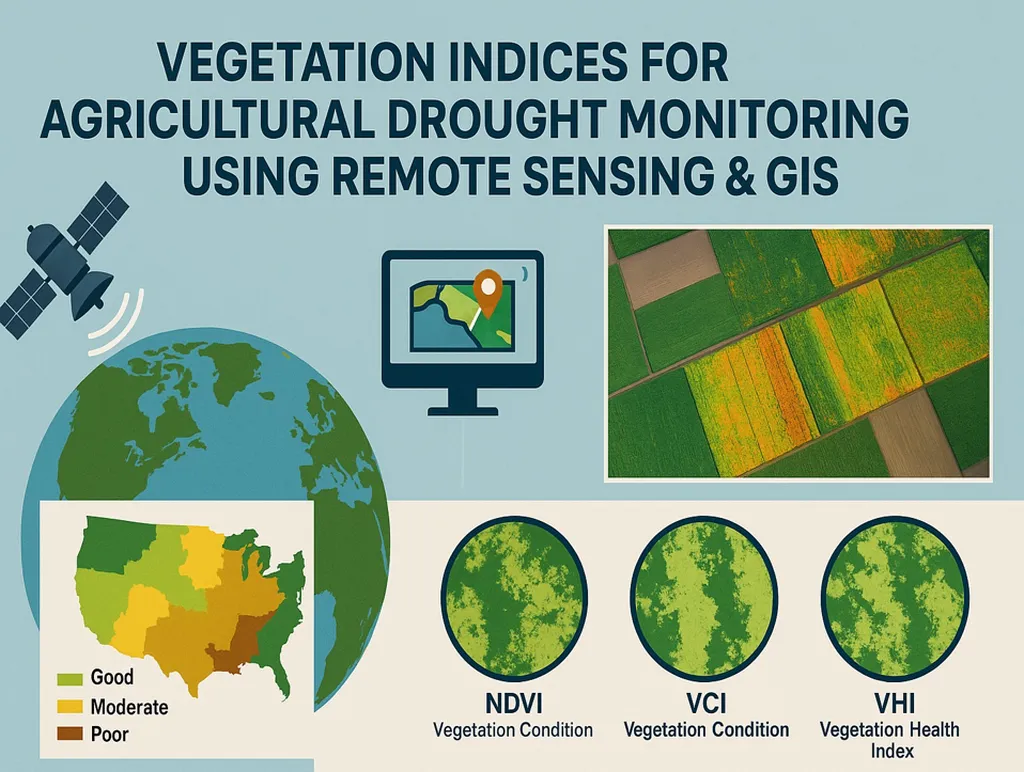
In the heart of Indonesia’s Yogyakarta Special Region Province, a silent crisis is unfolding, one that threatens the very foundation of the region’s agricultural backbone. Sleman Regency, known for its fertile lands and vibrant agricultural activity, is grappling with a stark decline in agricultural health, a trend that has been meticulously documented in a recent study published in the International Journal on Informatics Visualization (JOIV), formerly known as Jurnal Ilmu Informasi dan Visualisasi.
The study, led by Guntur Bagus Pamungkas from Universitas Terbuka in South Tangerang, employs cutting-edge Geographic Information System (GIS) techniques and NDVI-based remote sensing using Landsat imagery to paint a vivid picture of the spatio-temporal dynamics of agricultural land health from 2017 to 2022. The findings are alarming. “Throughout the 2017–2022 analysis period, a concerning and consistent decline in healthy agricultural lands was observed,” Pamungkas reveals. By 2022, only 4581.56 hectares of agricultural land remained in a healthy state, a mere 0.011% of the total region, while unhealthy land surged from 1109.48 hectares in 2017 to 1160.8 hectares in 2022.
The implications of this decline are far-reaching, particularly for the energy sector. Agriculture and energy are intrinsically linked, with the former being a significant consumer of energy and the latter playing a pivotal role in agricultural productivity. The decline in agricultural health could lead to reduced crop yields, impacting the region’s food security and potentially driving up energy demand for agricultural activities such as irrigation and mechanization.
The study highlights a notable encroachment pattern from urban expansion zones into previously fertile areas, underscoring the urgency for integrated spatial planning. “Proactive protection and effective regulation of designated agricultural zones by the Sleman Regency Government are imperative,” Pamungkas emphasizes. This call to action is not just about preserving agricultural lands but also about ensuring sustainable socio-economic growth.
The research contributes to advancing GIS-based land monitoring approaches, offering actionable insights for sustainable land use policy formulation in rapidly urbanizing regions. It serves as a stark reminder of the need for harmonious urban development that coexists with agricultural interests.
As we look to the future, this study could shape developments in several ways. It underscores the importance of integrating remote sensing and GIS technologies in land management practices. Moreover, it highlights the need for interdisciplinary approaches that bring together experts from agriculture, urban planning, and energy sectors to devise sustainable solutions.
In the words of Pamungkas, “Strengthening policies for sustainable urban development in harmony with agricultural interests is pivotal to securing prosperous and balanced socio-economic growth.” This sentiment resonates not just in Sleman Regency but also in numerous regions worldwide grappling with similar challenges. The study, published in the International Journal on Informatics Visualization, serves as a beacon, guiding us towards a future where agriculture and urban development coexist harmoniously, ensuring food security and sustainable energy use.