
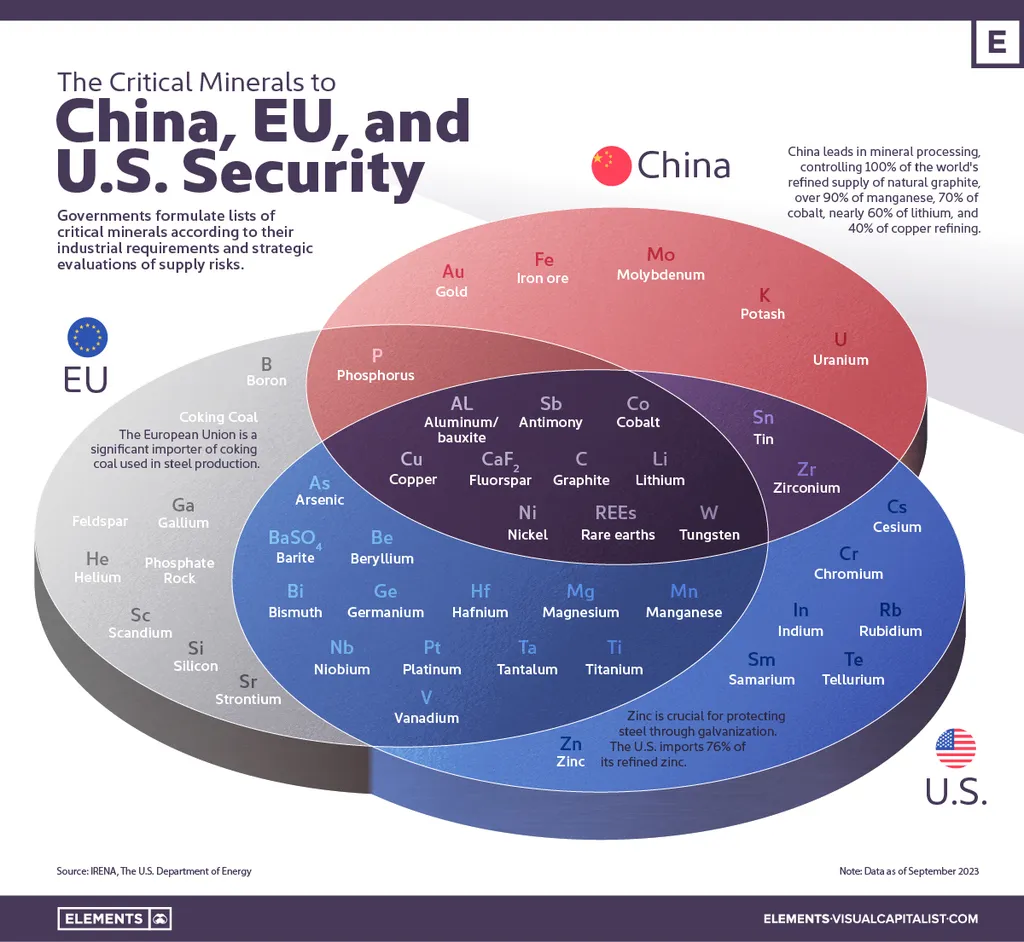
In a move that underscores the global race for critical mineral dominance, a European start-up’s breakthrough technology has found its first large-scale application not in Europe or the U.S., but in China. The innovation, capable of transforming low-grade bauxite into high-quality aluminium feedstock, was unveiled at an industry conference in Miami, promising to revive exhausted mines and unlock critical minerals essential for semiconductors, electric vehicles, and national defence.
The technology, developed by French-Swiss firm IB2, has been rapidly deployed in Liulin, a coal-mining county in Shanxi province. Just 10 months after construction began, an industrial complex based on this technology is now operational. This swift execution stands in stark contrast to the deliberations and policy statements issued by Western governments, which have been grappling with the challenges of reshoring critical mineral production.
The project, a partnership between IB2 and Shanxi Senze Energy Technology Group, marks the world’s first large-scale deployment of this revolutionary silica-removal technology. It is a testament to the unprecedented coordination between a provincial government eager for transformation and a local energy industry determined to take the global lead.
The rapid deployment of this technology in China raises critical questions about the pace of innovation and implementation in the West. While European and American officials have been holding summits and issuing policy statements, China has moved quietly and at lightning speed. This development could significantly reshape the global supply chains for critical minerals, further tilting the balance towards China.
The implications of this project extend beyond the aluminium industry. The technology’s ability to extract critical minerals and rare earth elements positions it as a game-changer in the global race for technological supremacy. As Western governments sound the alarm over fragile supply chains and overdependence on China, this development serves as a wake-up call for faster, more decisive action.
The project in Liulin is not just about reviving exhausted mines; it is about redefining the future of critical mineral production. It challenges the norms of innovation and implementation, setting a new benchmark for the industry. As the world watches, the question remains: will the West respond with similar speed and coordination, or will it continue to deliberate while China forges ahead?
This development is a stark reminder that in the global race for critical minerals, speed and execution are as crucial as innovation. It is a call to action for Western governments and industries to accelerate their efforts, lest they find themselves further behind in the race for technological and economic dominance. The future of critical mineral production is being written in Liulin, and the world is watching.