
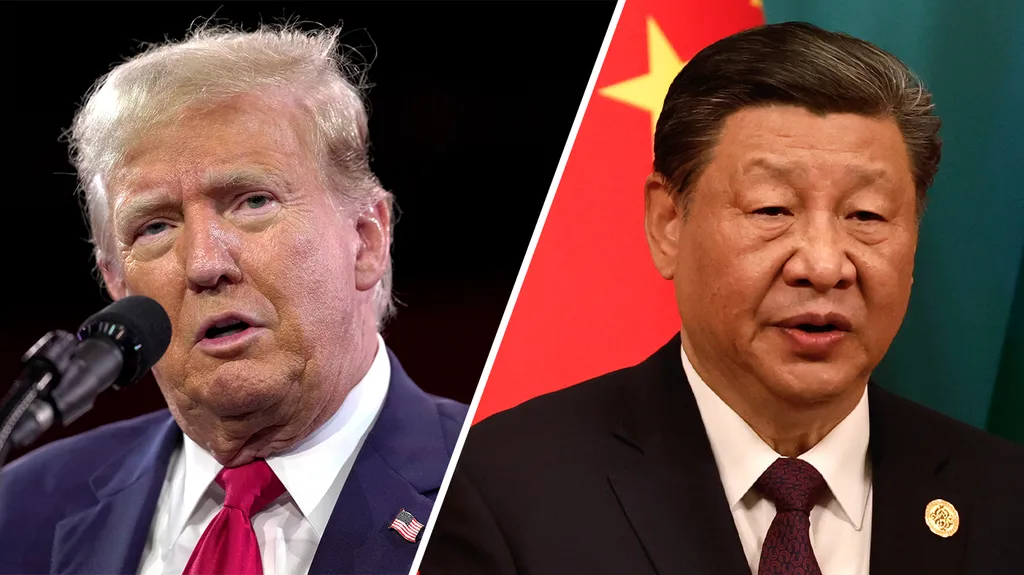
In a bold strategic maneuver, China has escalated its export restrictions on rare earth minerals and permanent magnets, a move that analysts believe is designed to gain leverage before a crucial meeting between U.S. President Donald Trump and Chinese President Xi Jinping later this month. The restrictions, announced on Oct. 9, require foreign firms to obtain Chinese government approval to export foreign-produced rare earth magnets and semiconductor materials containing 0.1% or more Chinese rare earth materials. Export to U.S. defense industries has been effectively banned starting from Dec. 1.
China’s dominance in the rare earth sector is staggering, accounting for some 70% of rare earth mining, 90% of processing, and 93% of magnet manufacturing. This move strikes at the heart of U.S. strategic vulnerability, with profound implications for national security, as well as for American semiconductors, jet engines, EV batteries, and military weaponry.
“It’s an unprecedented move. We’ve never had mineral restrictions at this level and particularly ones targeted at our defense industry,” says Gracelin Baskaran, director of the Critical Minerals Security Program at the Center for Strategic and International Studies. “China’s weaponization of rare earths has backed us into a very tight corner when it comes to our own national security.”
In response, Trump announced new 100% tariffs on Chinese goods starting next month, on top of the 30% already in place, as well as controls on “any and all critical software.” China, however, has stated that the tariff threat wouldn’t force a climbdown, though it would welcome negotiations. “China’s stance is consistent,” its Commerce Ministry said in a statement. “We do not want a tariff war, but we are not afraid of one.”
The new Chinese rare earth regulations mirror U.S. export restrictions that have been used to strangle China’s tech industry for years. The U.S. foreign direct product rule (FDPR), dating back to 1959, allows Washington to stop the sale of anything produced using U.S. technologies, even if traded by foreign entities. This rule was recently used to prevent Chinese telecom giant Huawei from gaining access to chips made using American tools.
China’s move is not just retaliatory but also strategic. The restrictions on rare earth exports are designed to gain leverage in the upcoming meeting between Trump and Xi. China is dealing with entrenched deflation, record youth unemployment, and a real estate market that has halved in just four years. Beijing desperately wants a semblance of tariff stability to know what its factories can produce and sell on a consistent basis.
Moreover, the detail of the rare earth export controls makes it clear that China wants access to the advanced semiconductor chips that the U.S. has blocked it from acquiring. Rare earths are vital for chip assembly, and the new regulations require government export licenses for any rare earths used in semiconductor manufacturing or testing equipment, including sub-14-nanometer chips, or high-spec memory chips.
By restricting U.S. access to the materials necessary to make the chips that Washington refuses to sell to China, Beijing is essentially reasserting its sovereignty over an upstream portion of the supply chain. “What this really highlights is how integrated the two economies are,” says Baskaran. “That when you take out semiconductors, magnets, or minerals, the supply chain collapses.”
The question is whether China’s new export restrictions are simply retaliatory or represent a tectonic shift in trade policy. China has never been shy about weaponizing trade, though previous restrictions have typically been targeted retaliation for perceived affronts. Whether export restrictions become an umbrella policy wielded to maintain strategic advantage remains to be seen.
Analysts suspect that China is poised to include even more items in its export restrictions soon, with a slew of minerals like magnesium, titanium, or cobalt possibly weaponized. The race is now on for the U.S. to turn its critical mineral weakness into a strength immune from pressure. Bringing new mining facilities online on home soil and in friendly nations is a national security priority.
However, the average wait for a mine to go from discovery to production in the U.S. is 29 years—second-slowest in the world behind only Zambia—and there is always a chance that community groups or other stakeholders can file legal objections. In March, Trump signed an executive order mandating agencies to fast-track mineral production permits and open federal lands to mining. The Pentagon also struck an unprecedented deal to buy a $400 million stock in rare earth company MP Materials, guaranteeing a ten-year floor price for the strategically crucial rare earth magnet neodymium-praseodymium.
Last week, Noveon Magnetics, the only U.S. manufacturer of rare earth magnets, announced a memorandum of understanding with Australia’s Lynas Rare Earths to establish a